Large-Format Continued

Tabatha Hawks from Hawks Nest Photography and I decided to go for a hike and photograph the surrounding foothills around Avimor, Idaho. Here is my favourite picture.

2016 © Louise Levergneux

2016 © Louise Levergneux


In the last few weeks, I have found many books created in large-format. If you have answers or comments to the questions below please don’t be shy and send me an email or a comment.

What dimensions are you comfortable working with, small or large? After working and experimented with size, I’m going with small!

What moves you to create big? A personal dream to publish the biggest book. It probably has to be one-of-a-kind. Who would want to publish a large edition of a large-format book?

Have you ever had problems binding large books because of the width of the paper or cloth?

What drives an artist to create a book? The idea or the dimensions? I start with an idea most of the time. My Memories of My Memories was a special case, I started with the dimensions necessary for the concept. The dimensions were chosen so grown adults would be aware of their size—small—holding this large family album.

Do the dimensions of a book limit sales? Library & Archives Canada in Ottawa, Ontario, acquired my book My Memories of My Memories, it took eleven years for them to decide, Eh! Geez! Hmmm! But they did...

Galleries have a dimension restriction for call to artists why is 18 inches in any direction the limit size? 

Do you know of any shows for the large-format? Should we get one organized?

Do libraries collect artists’ books with particular dimensions in mind?

Is your inventory space big enough for other large-format books? Well, my Half Measure Studio no longer has the storage room for big books.

Uh!...

Whatever makes us want to publish in large-format, we need to try.


Another artist who has made large-format a part of his work is Thomas Parker Williams. Thomas portrays his subject in a way that affects the deepest part of your soul, either through nature, fire, wind, light, rhythm even a love affair. His work includes handmade artist book editions, unique book works, printmaking, and painting.

Williams is both a musician and a visual artist, so no surprise that his artist book editions contain an audio element—music or sound work. All parts of the sound work is composed, performed, and recorded by Thomas.

Fire Book is 24 inches by 18 inches closed. The materials used to create this book are oil and acrylic on paper, enamel on mylar and bound with cloth with painted cover. Fire Book is an experiment about the mystery of fire. Seven unique painted flame studies are paired with seven unique transparent Mandalas. The final Mandala is on the cover.

1998 © Thomas Parker Williams, Fire Book, cover

1998 © Thomas Parker Williams, Fire Book, cover

1998 © Thomas Parker Williams, Fire Book

1998 © Thomas Parker Williams, Fire Book

1998 © Thomas Parker Williams, Fire Book

1998 © Thomas Parker Williams, Fire Book

1998 © Thomas Parker Williams, Fire Book

1998 © Thomas Parker Williams, Fire Book

1998 © Thomas Parker Williams, Fire Book, detail

1998 © Thomas Parker Williams, Fire Book, detail

Natural / Un-Natural is a small book when closed with dimensions of 7.75 inches by 12.5 inches by 1.75. This book comes in a custom wood and polycarbonate case and is 23.25 inches in diameter when opened. The book consists of original painted panels executed with dry pigments in alkyd medium on paper arranged in a circular accordion structure with twelve double-sided sections and Tyvek hinges. 

The twenty-four painted panels represent events affecting our environment and actions exacerbating these events. Each panel is divided into two sections to give two possible visual interpretations. Events described by the panels are: extra-terrestrial impacts, solar storms, volcanic activity, eruptions, earthquakes, tsunamis, wind, dust storms, rain, flooding, hurricanes, storm surges, tornadoes, blizzards, drought, wildfires, earth shifting events, glacier melting and calving, permafrost melting and sea level rise. The climate is changing, we cannot control the events that threaten our environment but we could have controlled our actions. Now we may be powerless to stop this process!
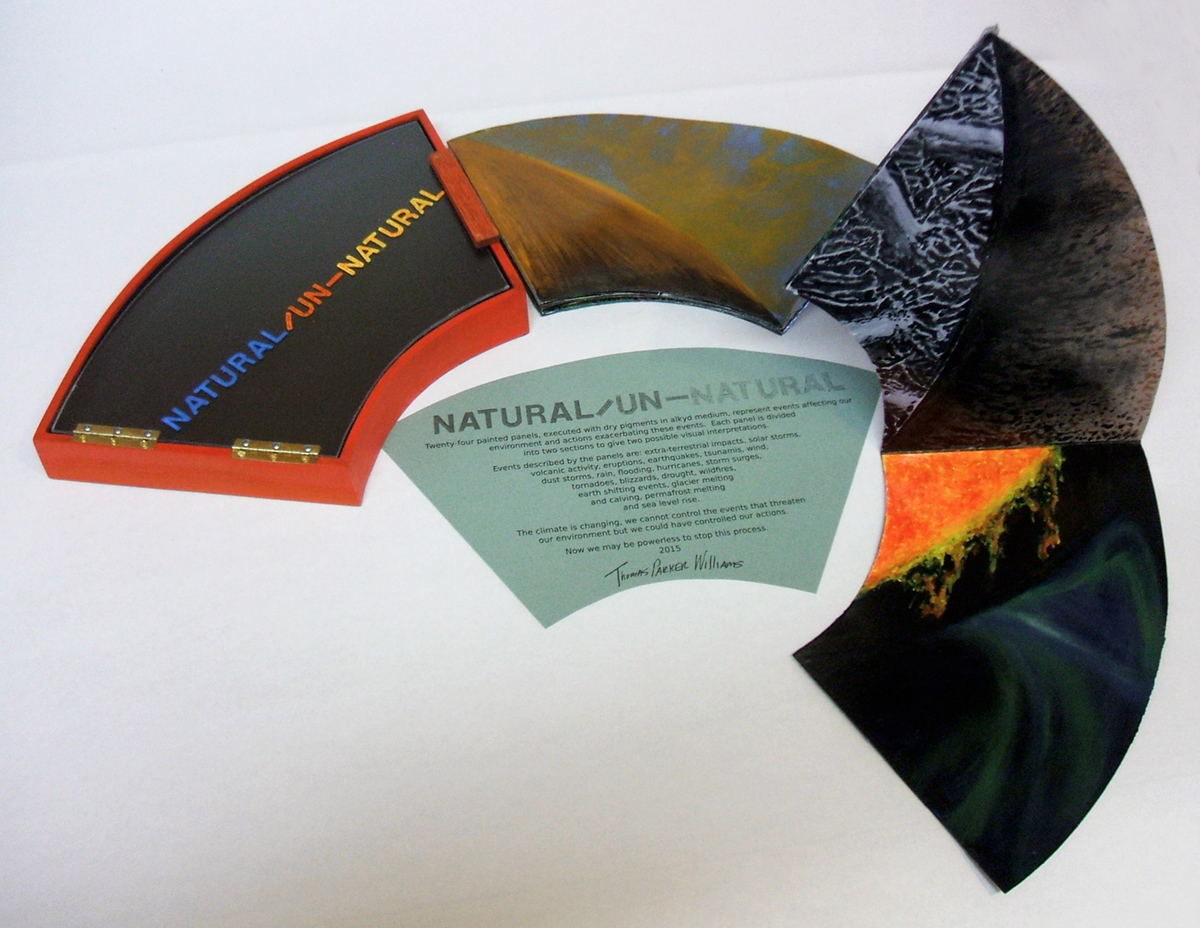
2015 © Thomas Parker Williams, Natural / Un-Natural

2015 © Thomas Parker Williams, Natural / Un-Natural

2015 © Thomas Parker Williams, Natural / Un-Natural

2015 © Thomas Parker Williams, Natural / Un-Natural

My visit to Thomas’ website brought me to an amazing book—Jasper's 72 Triangles, a book that is 26 inches by 30 inches unfolded.

Closed and in its box the book is 9 1/2 by 11 by 2 inches. This book is made of cut paper and Tyvek painted with metal pigments in oil medium and presented in an acrylic box.

Jasper's 72 Triangles inspired by the recent "Number" reliefs by Jasper Johns. Starting with the concept of a single number in a discrete area, in this case a double-sided triangle, and then connecting 36 double-sided triangles together, the book-painting becomes dynamic by folding into many configurations of triangles for display. The work uses only the numbers of 1,2,3,4,5,6,7,8 and 0. Adding the displayed numbers together results in a sum that is a multiple of 12 or 36 or 72 in many of the possible triangle combinations. A folding diagram is provided as an aid to returning the book to its correct folded state to fit into its acrylic box.

Has these books affected your soul yet?

Now, I have to find the biggest book. Check next week and see if I found it.

Another Large Book


Lots of time this week was spent trying to integrate my website server with MailChimp (an email marketing service) with no luck. I have decided that spending so much time on a company that only cares for paying customers is not a good use of my time. My preference is to communicate with artists and create my books. So I have had to resort to the old fashion way of announcing my new blog posts.

Now to better news, I’m happy to announce the winners for subscribing to my blog posts. The first subscriber Peggy Seeger (brave soul) is the first winner of a volume of City Shields, the 15th subscribers after are: Ka Mahina, Kerry McAleer-Keeler, and Monique momo Moore-Racine. The numbers tell me I’m close to another volume give away, so please subscribe.


As an artist my ideas come from my surroundings. Subjects are numerous and I’m captivated by the themes that ignite the beginning of an artists’ book. How do you choose your themes? Where do your find your ideas?

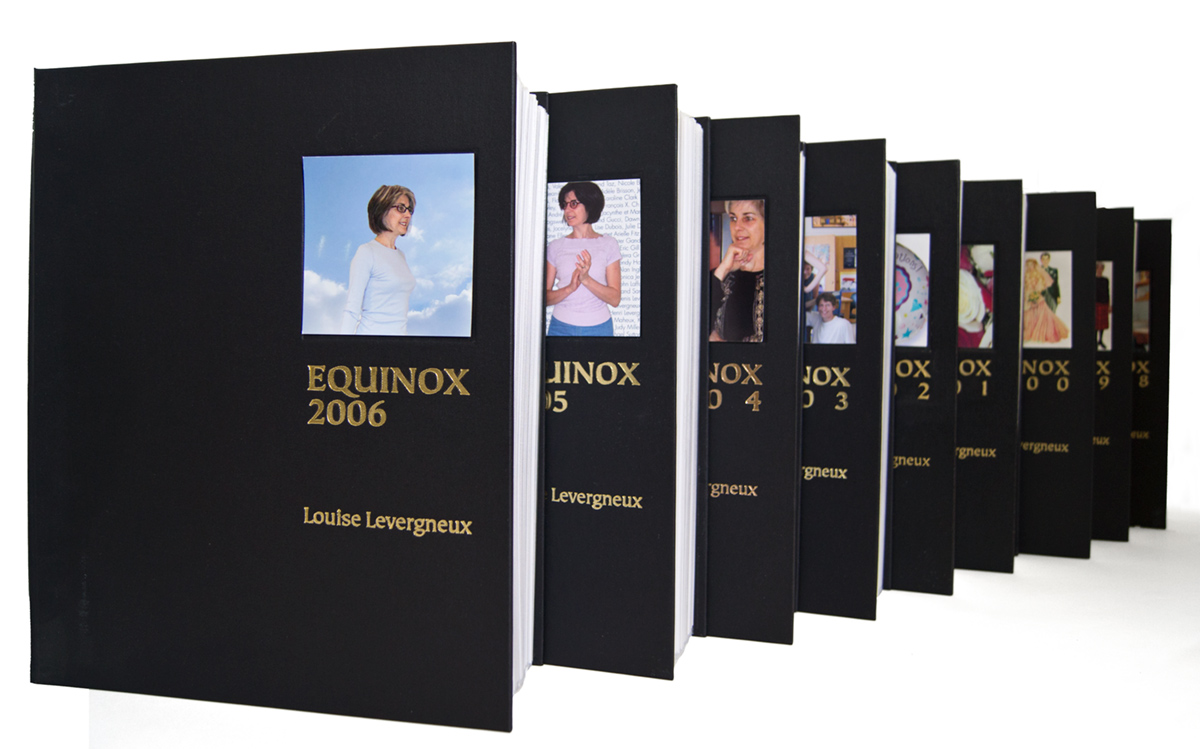
I took 10 years to create a series of nine artists’ books entitled Equinox—books on the mundane of daily activities. I started in the spring of 1998. The first book of the series began after the death of my father. This experience reminded me of missed moments. Each book is not large per-say (9in x 11in x 4in deep) (23cm x 28cm x 10cm deep) but the years it took to finish these volumes were too many. 

© 1998-2007 Louise Levergneux, Equinox

© 1998-2007 Louise Levergneux, Equinox

Nowadays, no matter what project I begin, my husband always teases me, “Think small!”


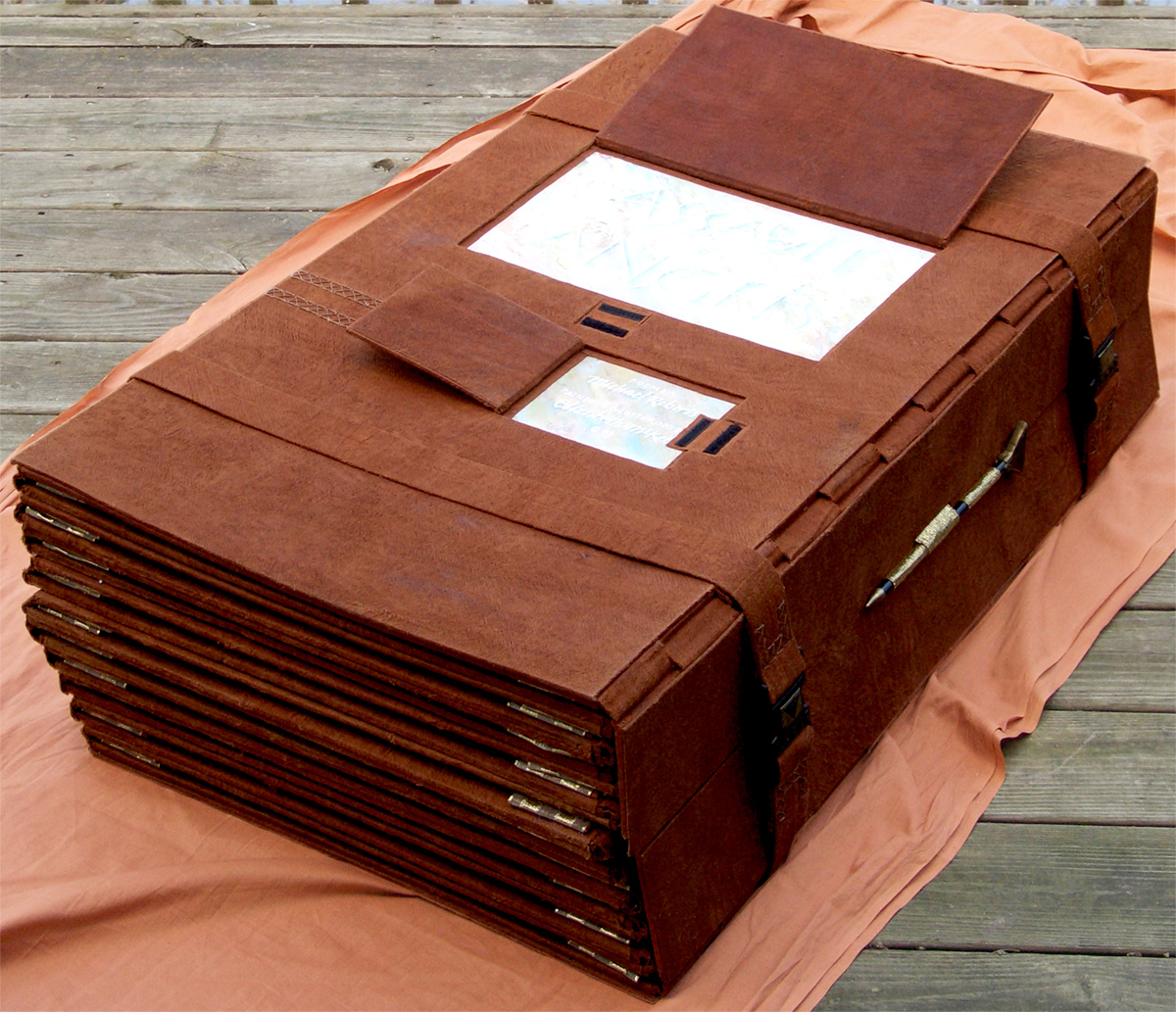
Continuing on this fascinating journey of large format artists’ books, a book that caught my attention was Elizabeth McKee’s book Assault of Angels. I was curious about the inspiration behind the book since I had as you know just gone through a major move last summer! 

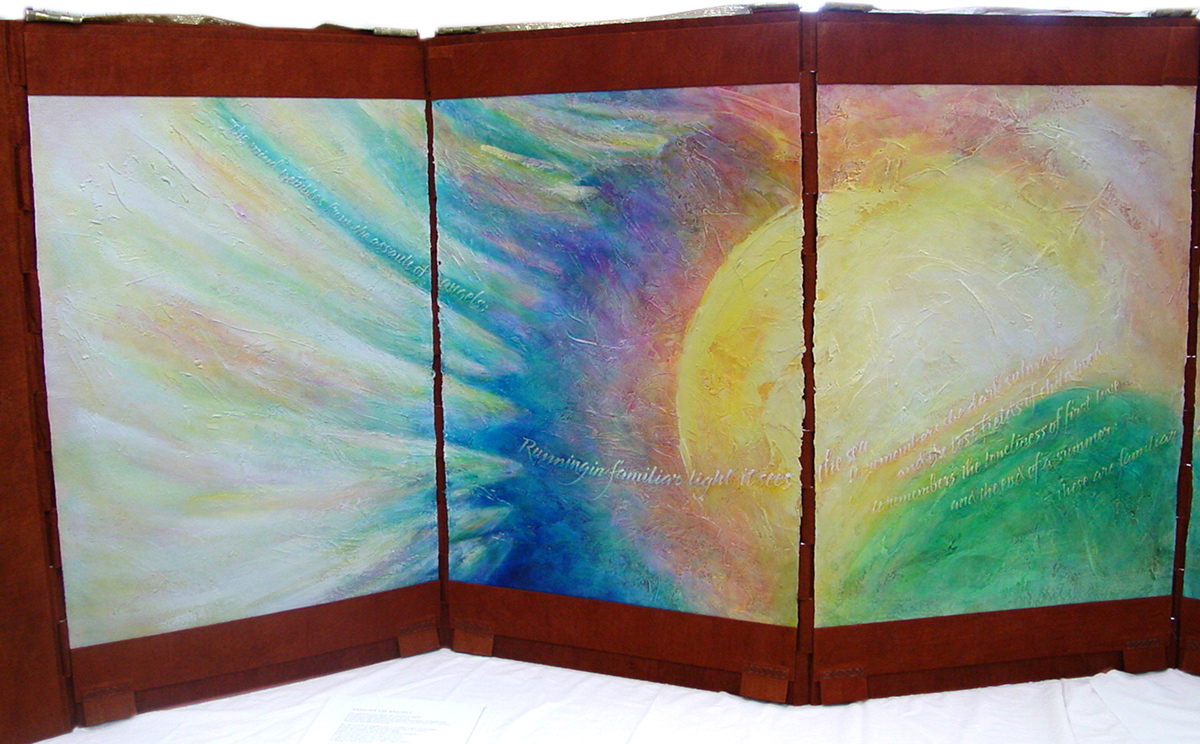
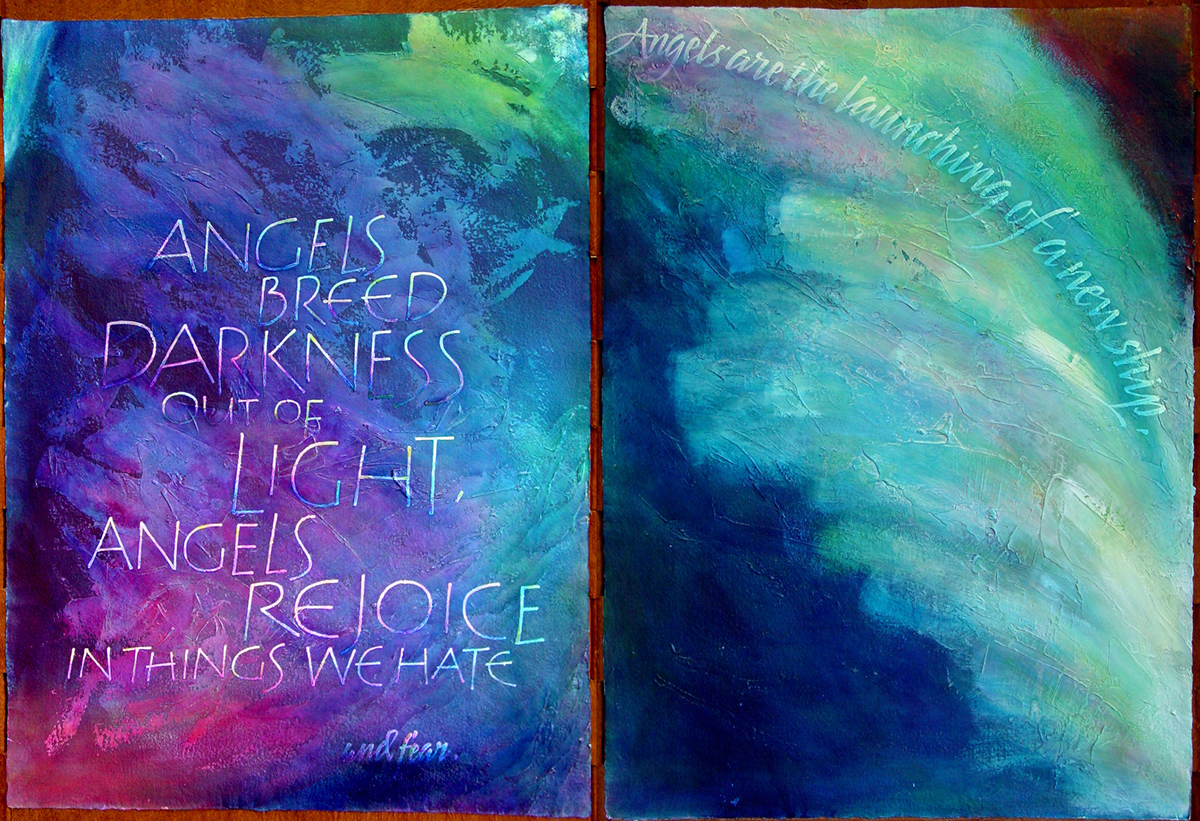
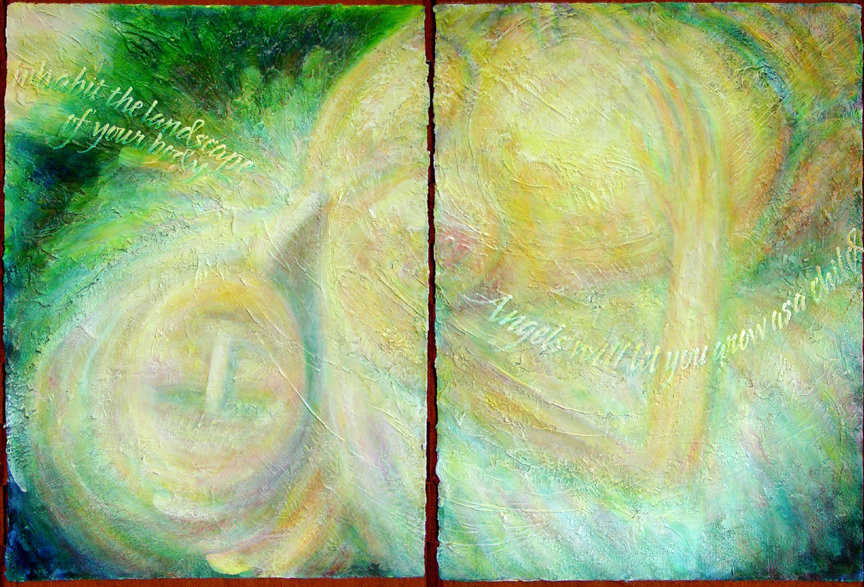
Artists’ books no matter their size, they reflect personal and heartwarming ideas. Elizabeth inspired by a poem and a decision to move her home across the world. From these experiences Elizabeth created Assault of Angels, a 22in by 3 in by 10in (56cm x 94cm x 25cm) deep accordion book that weighs about 70 lbs (1.9 kg) without the box. When opened Assault of Angels is 33ft (10m) long. The longest opened book I have seen yet!

Elizabeth clarifies... « In the late 80s around the time when my husband talked about moving us from Ottawa to Bangladesh. I found a poem in The Faber Book of Modern Verse edited by Michael Roberts, an English poet who died in 1948 of leukemia.

I remember sitting in our living room in Ottawa telling a visitor I was “very comfortable here.” So the line in the verse “A time comes when the house is comfortable and narrow” resonated with me. I wanted to paint angels as a mighty force signaling the fantastic size and power of the unknown, not creatures that sit gently on one’s shoulder. The images needed to break out of the pages. I started with twenty (22in x 30in) (56cm x 76cm) sheets of St-Armand cotton paper which I thought might eventually be framed and hung together. The folly of that idea dawned and the Japanese Screen Hinge binding saved the day. »

© 2010 Elizabeth McKee, Assault of Angels

© 2010 Elizabeth McKee, Assault of Angels

© 2010 Elizabeth McKee, Assault of Angels, acrylic paint and gesso on handmade paper mounted on foam core board which is backed with Ugandan bark cloth

© 2010 Elizabeth McKee, Assault of Angels, acrylic paint and gesso on handmade paper mounted on foam core board which is backed with Ugandan bark cloth

© 2010 Elizabeth McKee, Assault of Angels

© 2010 Elizabeth McKee, Assault of Angels

© 2010 Elizabeth McKee, Assault of Angels

© 2010 Elizabeth McKee, Assault of Angels

It took 10 years and four moves for Elizabeth to publish Assault of Angels.

What moves you to create?


More Large Format Artists' Books

Artists work on their own most of the time and wear many hats. Being queen and king of our domain we are free or are we? This freedom comes at a price—loneliness. As artists no matter what medium we work in, the solitary state of the studio comes into play. We are tough, it may take a while but in the end we get inspired by the world around us.

Look what I found in Boise! What will I do with this? Have I found home?

© 2016 Louise Levergneux

© 2016 Louise Levergneux

Last week I introduced Christopher Kardambikis’ large format accordion book Mundus Subterraneus. The first time we communicated I mentioned I had recently relocated from Salt Lake City, Utah, to Boise, Idaho. My blog post was a way to communicate with other artists. Christopher responded he had recently made a move himself to New York City from Los Angeles in a similar attempt to get to know more people making books and zines and such he started up a radio program. His program is at Clocktower.org. Paper Cuts is an exploration of the contemporary world of zines and DIY publishing. Hosted by Christopher Kardambikis himself, each program features writers, performers, and artists who have shared their work in print, on paper, and in small editions. This experience of reaching out and talking to many people has really been one of the best things he has ever done. So please listen to his program and find out how Christopher finds artists and writers discussing their practice, studio, daily rituals, and their work fascinating.


After communicating with Christopher I decided to send a call through the BOOK_ARTS-L mailing list by Peter D Verheyen to find other artists who create artists’ books in large format. The response was wild I could not keep up with the emails popping in my inbox.

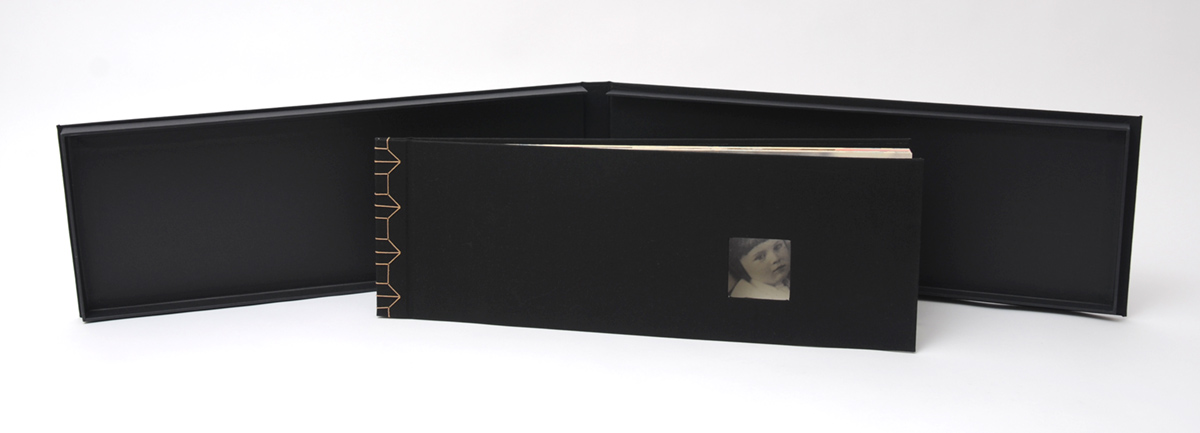
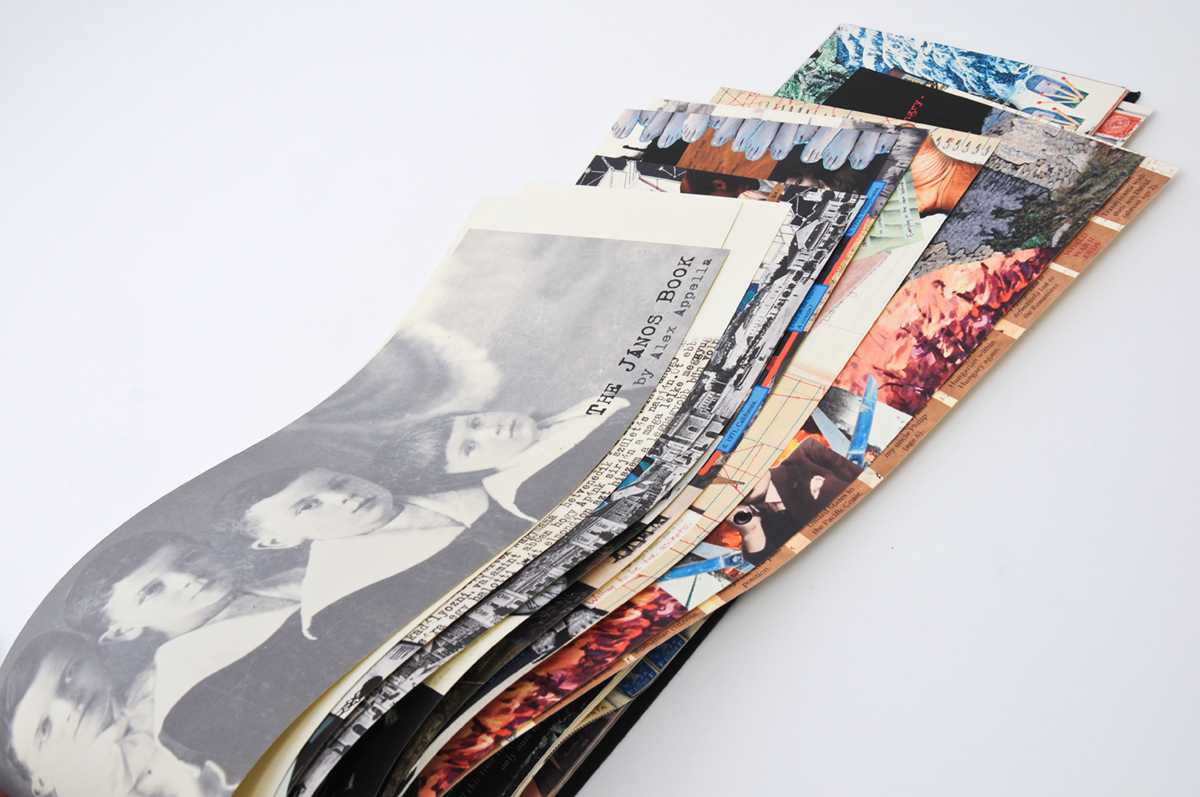
I enjoy hearing the ideas behind books, and the stories that inspire them. Let me present to you Alex Appella’s, The János Book. Alex writes on the reasoning behind her large book that took 12 years in the making.

© 2006 Alex Appella, The János Book, 8.5 inches x 25 inches x 1.5 inches closed and over 4 feet opened

© 2006 Alex Appella, The János Book, 8.5 inches x 25 inches x 1.5 inches closed and over 4 feet opened

« How long is 90 years?
From the silence of its long black cover, The János Book opens, and explodes with what had been unspeakable for over 70 years.
“90 years is long enough to be a child in World War One, a man in World War Two…”
“90 years is long enough for secrets to last 70…”

My Hungarian grandparents emigrated to California in 1931. They passed away before I was born, but left a legacy of questions that began to surface in our home in the 1980s. By then, the only remaining family member who could answer those questions was János (pronounced Ya-noash), my grandfather’s youngest brother, who had emigrated from Transylvania to Argentina in 1949. The questions were innocent enough. My mother always believed she had only two uncles—János and Imre. But then a photo of four young men was found among my grandfather’s things. Three faces were familiar. Who was the fourth man?

In 1994 I traveled to Argentina to meet János, to ask the questions. The answers—the secrets—revealed our identity, and revealed the pain of lying, even to protect those you love. The János Book not only encompasses a family’s history, it reveals the man who, at the age of 90, decided to tell it. The reader is taken on a journey from Oregon to Argentina, to Transylvania, and beyond. Original letters, photographs and paintings entwine János’ testimony with my poetry to reveal a family’s identity whispered away two generations prior. »

© 2006 Alex Appella, The János Book

© 2006 Alex Appella, The János Book

© 2006 Alex Appella, The János Book

© 2006 Alex Appella, The János Book

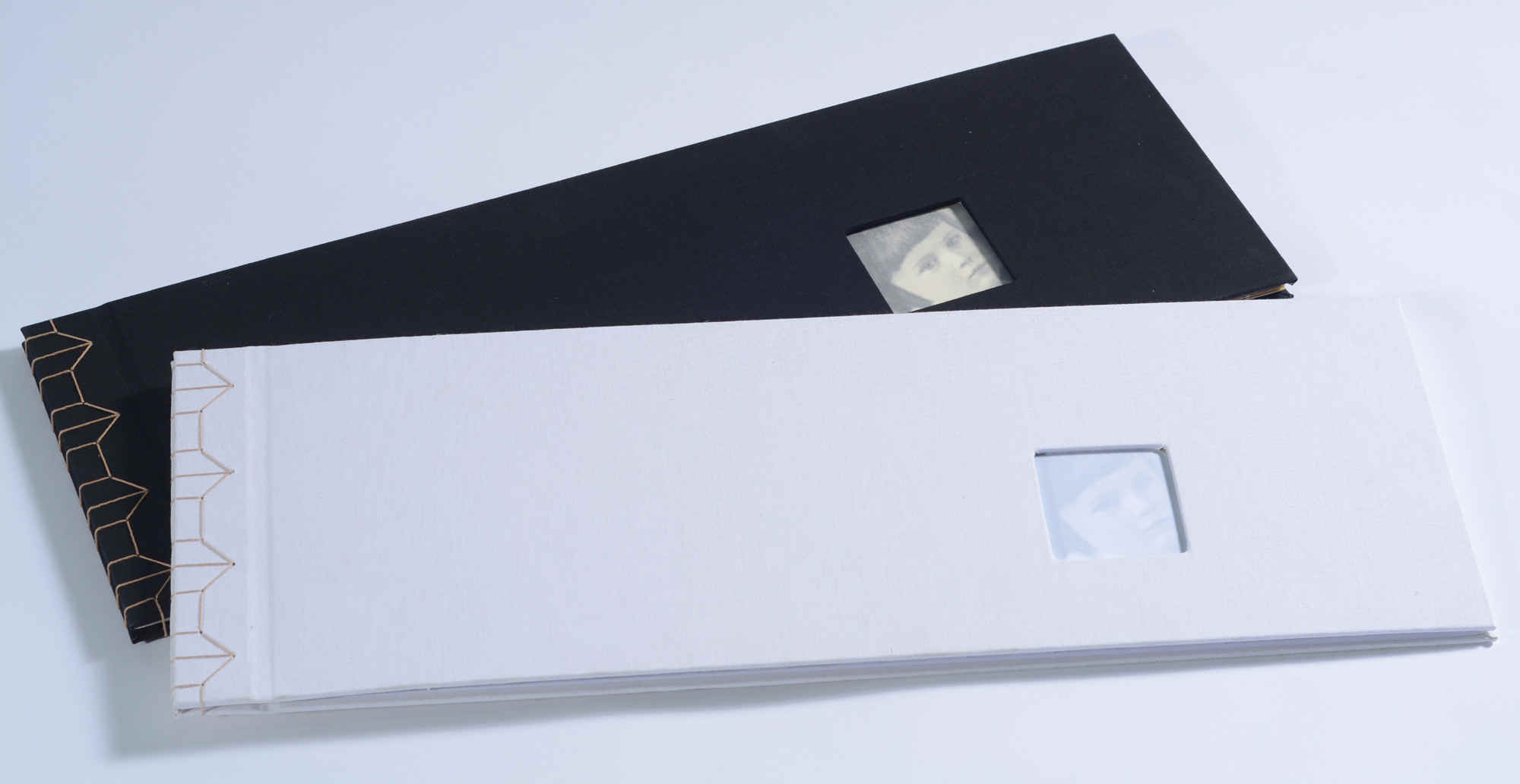
And then Alex brought to us a second book of identical size The János Letter, an interwoven volume, a continuation of events.

© 2006, 2012 Alex Appella, The János Book and The János Letter

© 2006, 2012 Alex Appella, The János Book and The János Letter

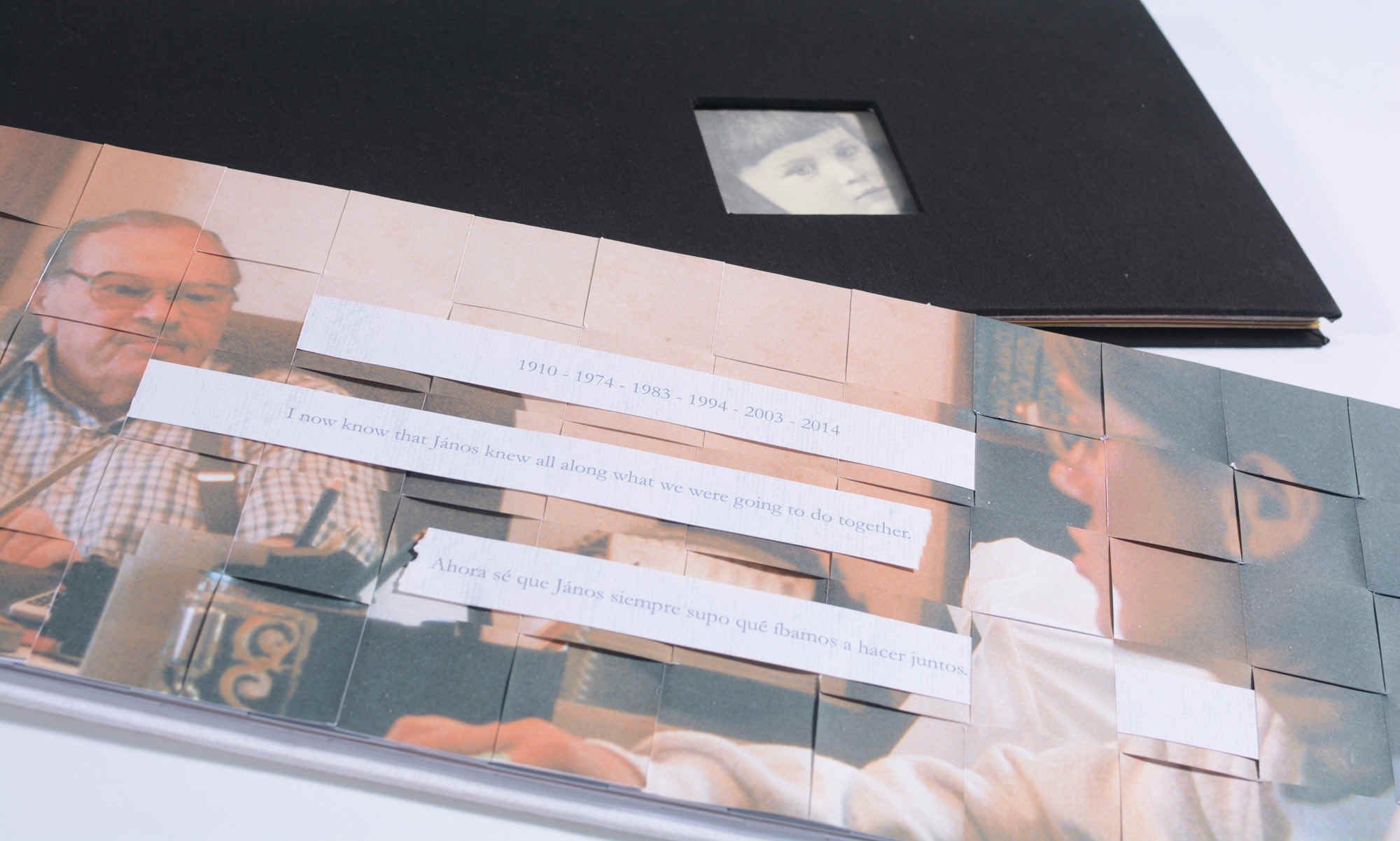
© 2012 Alex Appella, The János Letter

© 2012 Alex Appella, The János Letter

Alex explains... « I worked for many years researching, writing, and creating The János Book. Over a decade. It's the project that brought me to Argentina originally in 1994, to speak with János, my grandfather's brother. János was the only elder living who could answer questions that arose in our home in the US after going through my deceased grandfather's things.

After nearly 20 years of accompanying this project, I was rather certain I had written and produced all that could be written and produced. But then, in May of 2014, I received a letter in the mail. From János.

He wrote it to me in 1983, and due to a string of incredible events, as only real life can offer us, it showed up on my doorstep last May. János passed away in 2003.

The letter from János, both its arrival and its content, was too incredible to not bring to the readers of The János Book. As a writer, and a book artist, it was a new challenge to revisit a work I believed to be finished, and create a book that is...a prologue? ...an epilogue? I leave it to the reader to decide. However it is labeled, both books are now inseparable. One depends entirely on the other. Not only did the new book design need to mesh with the very large János Book in English, it needed to mesh with the much smaller trade edition in Spanish. It was a unique challenge. »

© 2006, 2012 Alex Appella, The János Book and The János Letter

© 2006, 2012 Alex Appella, The János Book and The János Letter

© 2006, 2012 Alex Appella, The János Book and The János Letter

© 2006, 2012 Alex Appella, The János Book and The János Letter

© 2006, 2012 Alex Appella, The János Book and The János Letter

© 2006, 2012 Alex Appella, The János Book and The János Letter

It takes courage to make two books of this size. I have decided—small books and small editions are the way to go. What do you think?

What creates your history/herstory? We all have interesting backgrounds, how do you portray yours?


Nostalgia

Spring makes me nostalgic, it’s a time to renew, a time to clear our spaces.

When I de-clutter my surroundings after the winter months my thoughts meander towards the past and its meaning.

I’ve been creating artists’ books since 1996. I was doing installations at the time and was not sure this was the direction I wanted to continue.

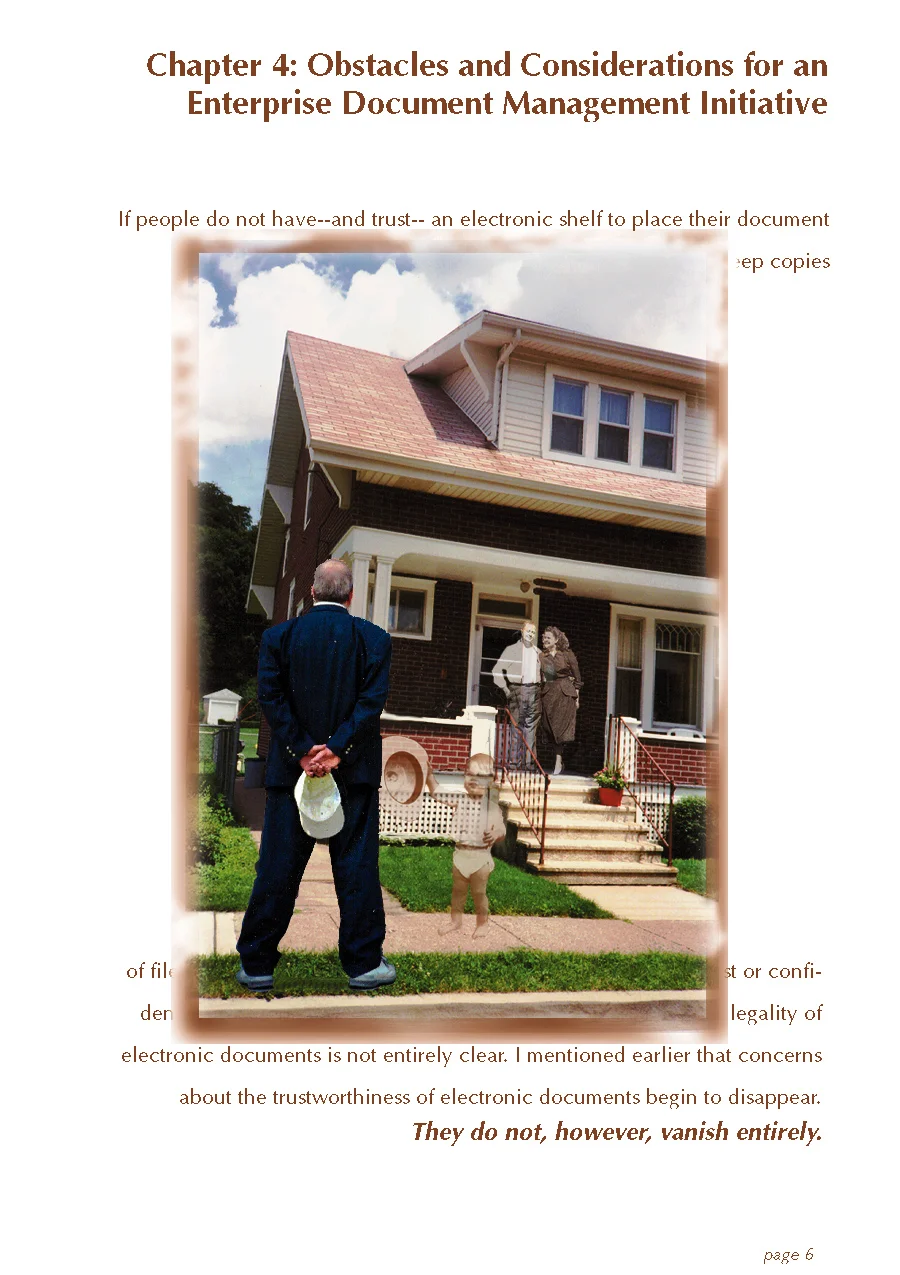
During the previous year my husband Michael Sutton published his own book Documents Management for the Enterprise, Principles, Techniques, and Applications, best-seller till the late 90’s. In the early part of that spring we travelled back to his hometown, and the trip brought many ideas and creativity. I shot lots of photographs of Michael contemplating his childhood. 

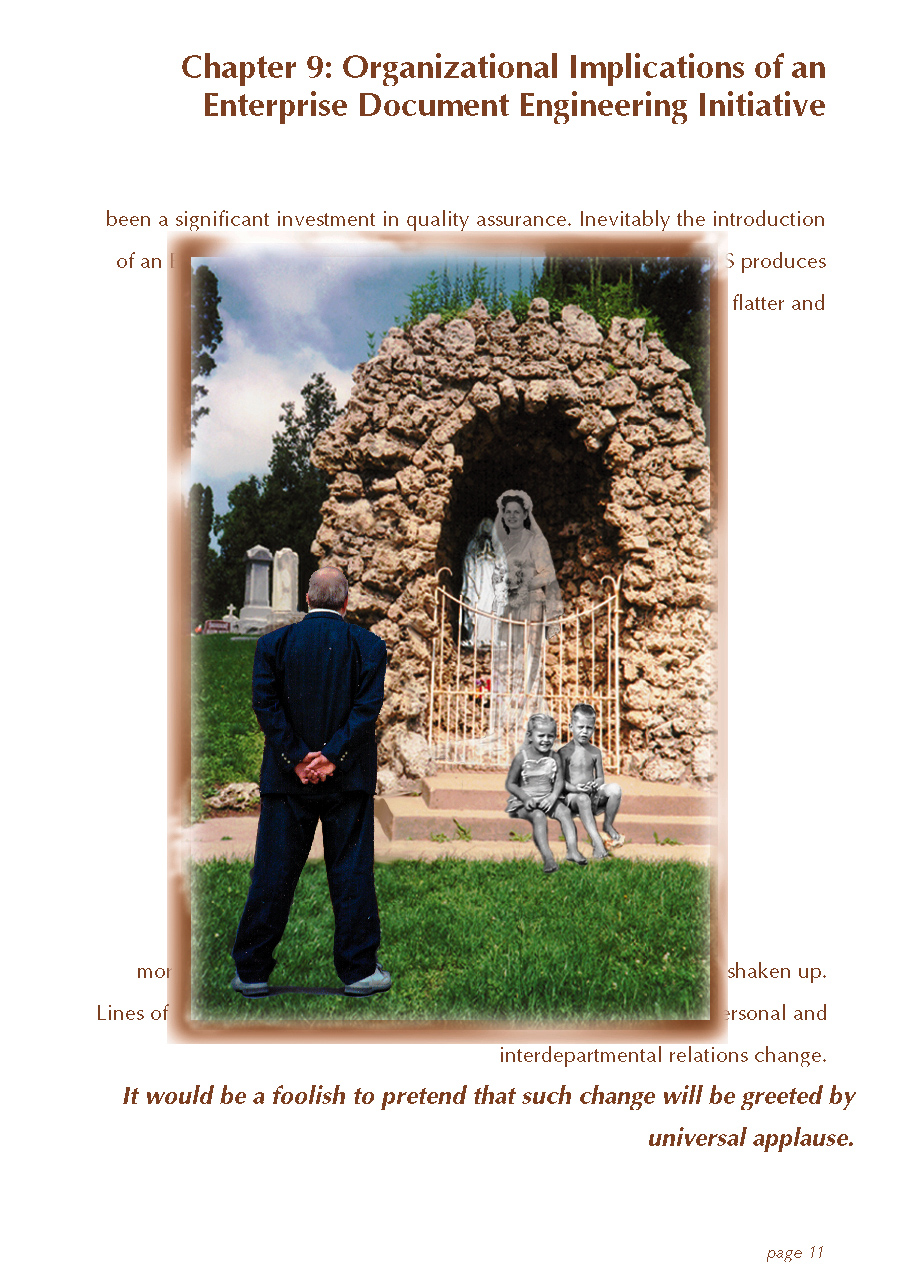
On our arrival back home, I read Michael’s book and appropriated groups of words or sentences from each chapter. These sentences taken out of context added a depth of emotions to the photographs I had taken. After months of talks on childhood and the past, I created my last installation on the theme of memories.

My installation was made of one book, a large book—My Memories of My Memories—a 22-inches by 30-inches closed artists’ book. The one-of-a-kind brings adults to perceive themselves as tiny in front of its size and resembles a family photo album. It needed to be big and awkward!  The array of personal family images helped trigger people’s memories of childhood with each turn of a page. 

Each page is a blend of my photographs, snapshots from a family album and a facsimile of the pages of Michael’s published monograph. Each chapter title of Michael’s book becomes each page of my book. The intermixed images simulate a bizarre sense of déja-vu.

This recollection brings me to re-introduce my artists’ book My Memories of My Memories. This is where my world of artists’ books began. I can’t remember the reason behind the long title!! But notice Michael’s book title!

© 1999 Louise Levergneux, My Memories of My Memories

© 1999 Louise Levergneux, My Memories of My Memories

© 1999 Louise Levergneux, My Memories of My Memories

© 1999 Louise Levergneux, My Memories of My Memories, Chapter 3

© 1999 Louise Levergneux, My Memories of My Memories, Chapter 3

© 1999 Louise Levergneux, My Memories of My Memories, Chapter 4

© 1999 Louise Levergneux, My Memories of My Memories, Chapter 4

© 1999 Louise Levergneux, My Memories of My Memories, Chapter 5

© 1999 Louise Levergneux, My Memories of My Memories, Chapter 5

© 1999 Louise Levergneux, My Memories of My Memories

© 1999 Louise Levergneux, My Memories of My Memories

© 1999 Louise Levergneux, My Memories of My Memories, Chapter 9

© 1999 Louise Levergneux, My Memories of My Memories, Chapter 9

Later, I created a smaller version of My Memories Of My Memories in an edition of 10. This version is 4.5 by 3.125 inches. One copy remains in my collection copy 1/10. The smaller version brings a childhood memory of keeping small treasures in our pockets and keeping them for rainy days.

The Library & Archives Canada/Bibliothèque et Archives Canada in Gatineau, Québec purchased the large format one-of-a-kind in 2007. 


During this wistful affection for the past, I researched large format books and found the work of Christopher Kardambikis.

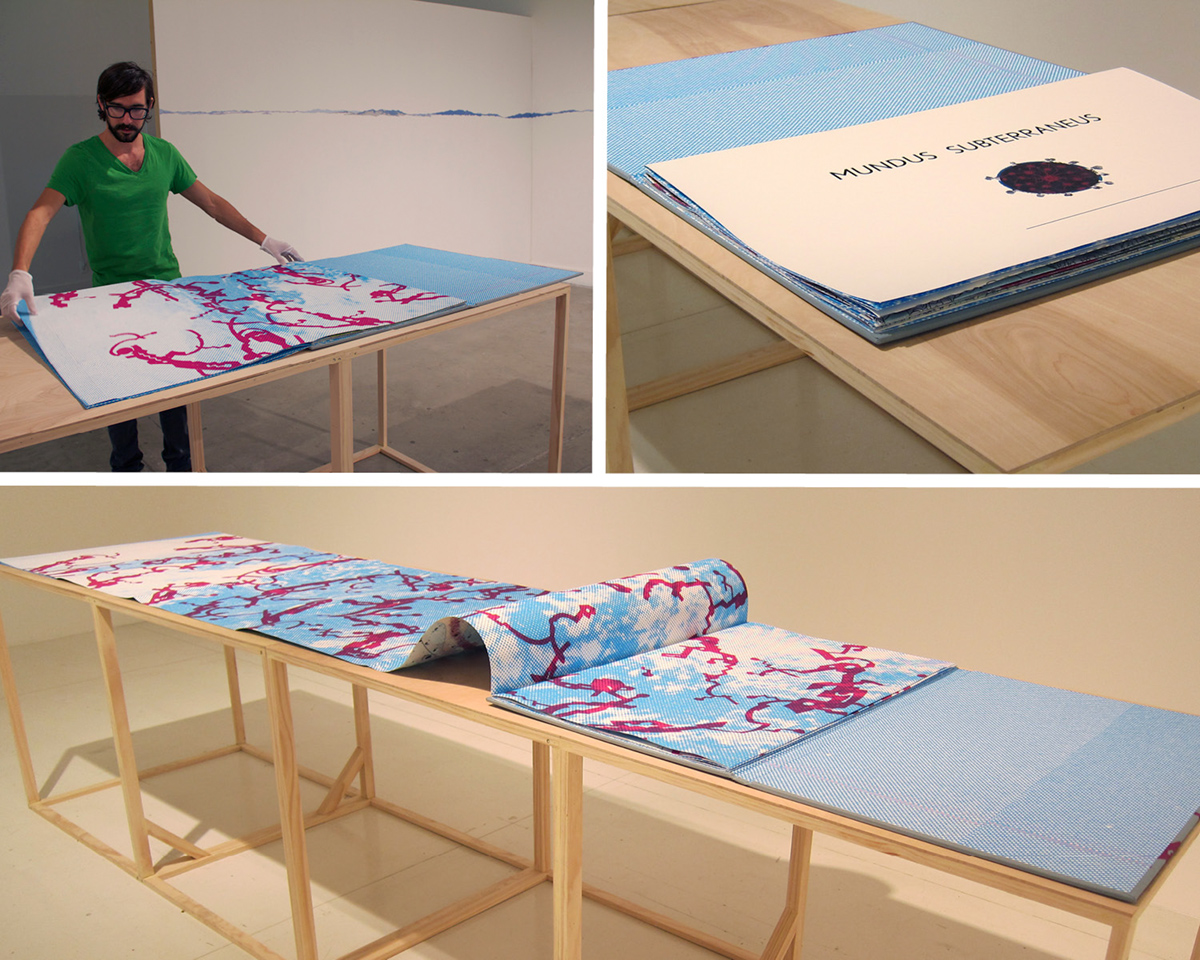
His 21-inches by 34-inches book Mundus Subterraneus, a hand-bound accordion extends to 28-feet unfolded. That’s BIG!

© 2012 Christopher Kardambikis, Mundus Subterraneus

© 2012 Christopher Kardambikis, Mundus Subterraneus

© 2012 Christopher Kardambikis, Mundus Subterraneus. Multiple digital print, silkscreen, india ink, and graphite on paper. Silkscreen on bookcloth.

© 2012 Christopher Kardambikis, Mundus Subterraneus. Multiple digital print, silkscreen, india ink, and graphite on paper. Silkscreen on bookcloth.

© 2012 Christopher Kardambikis, Mundus Subterraneus

© 2012 Christopher Kardambikis, Mundus Subterraneus

In the lineage of Kircher’s treatise, Mundus Subterraneus explores an absurd mythology for the future, pulling from the history of book production itself as well as science fiction, myth and cosmology. The work functions as an intimate atlas of artistic process. Reminiscent of Kircher’s play on the doubling of “mundus,” the visual information of Kardambikis’ book can be considered as both a series of two-page spreads or a 28-feet long image. In either case, one’s view is limited to a fragment or image of a larger schema. Like an atlas, an entire area is not viewed at once but rather is taken in as fractions of a whole. The book presents the viewer with sign systems of both the fantastic and the personal in an illustration that requires durational engagement. 

The book tackles the measuring of space and how we traverse place and was exhibited at the University of California in San Diego. Christopher set up a series of prints cut from paper and adhered to the wall of the gallery called Squaring a Circle - forming an image of the horizon as scene from the nearby desert. 

Mundus Subterraneus, the book, functioned like a cross section. If the earth formed a sphere that could be contained in the space of the gallery then the book was a core sample - a sliver of information down the centre of the sphere, flattened, condensed, and formed into an atlas. An atlas of the space, of the show, and of my practice all existing but never seen in its entirety all at once.

Such a wonderful book, I would have loved to see this exhibition in person. 


I love big books and the philosophy behind them. Remind me though never make a big one again!

Explosion Box

My blog is fulfilling its goal, I’m meeting and talking, or should I say emailing artists more than ever. 

I love to communicate with other artists I enjoy the interaction—the main reason for my blog. What a great day when emails are filled with wonderful images and accompanied information. It’s like Christmas!

Lots of work goes into blogging, and it takes time away from my most important priority creating artists’ books and taking photographs. Posts demand planning and communicating in an efficient manner. I am very grateful for those of you who responded on such short time frames.

Talking about lots of work, let's congratulate Helen Hiebert on her 100th blog post last Sunday! 

My blog is receiving more and more subscribers thank you for the support. I’m giving away a volume of the original 7 volumes of my series City Shields to the first brave subscriber to my posts and to every 15th subscriber on the list. I appreciate the compliments on my book box Finding Home. We are never alone in our experiences, I’m pleased my book conveyed a sense of place.


With the sun out and the forsythias loosing their blooms we know it is SPRING! So with camera in hand I photographed the first flowers that made me smile!

© 2016 Louise Levergneux

© 2016 Louise Levergneux


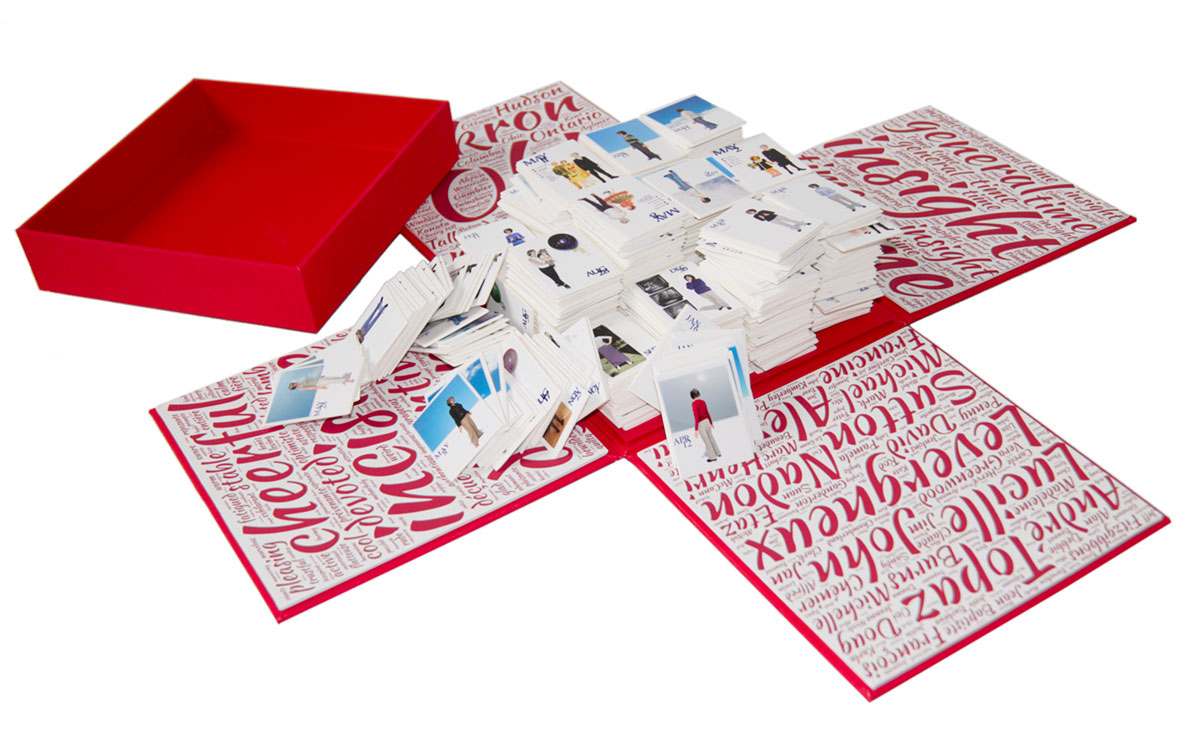
Back to business and the explosion box/book box. I like the last term! Susan Bonthron created a double explosion box (box within a box) based on the Chinese sewing box. Wonderful!

© Susan Bonthron

© Susan Bonthron

© Susan Bonthron

© Susan Bonthron

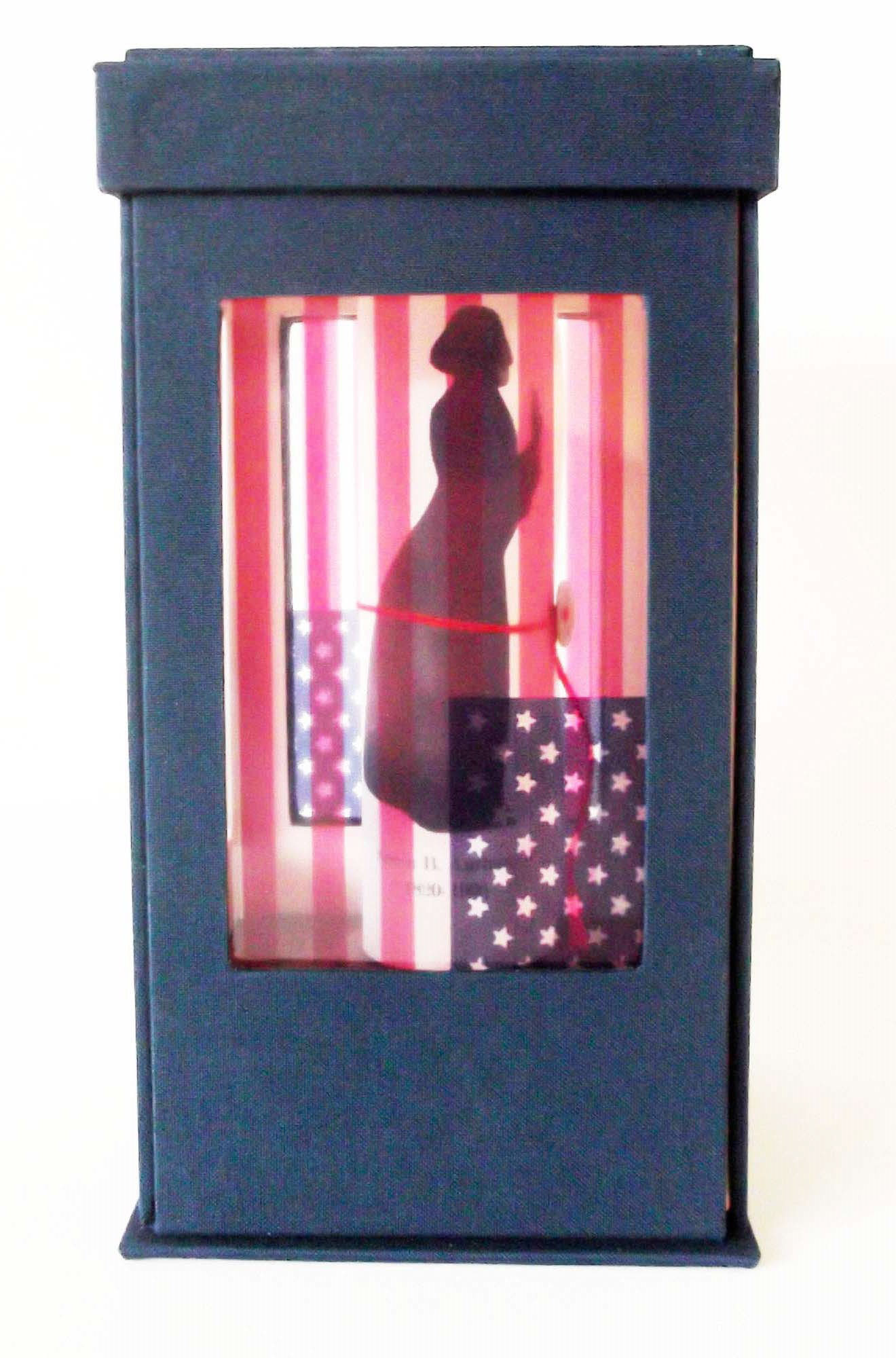
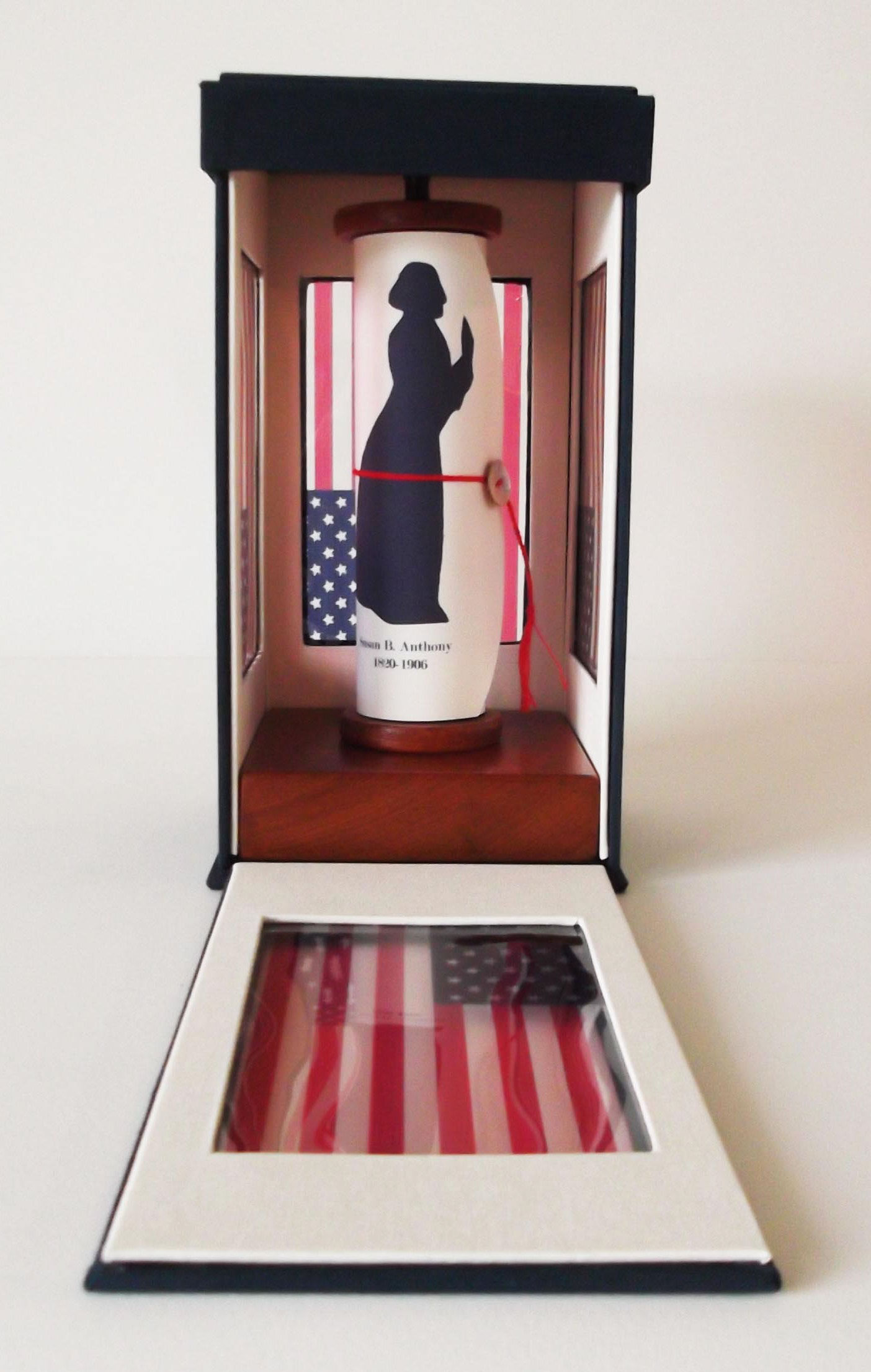
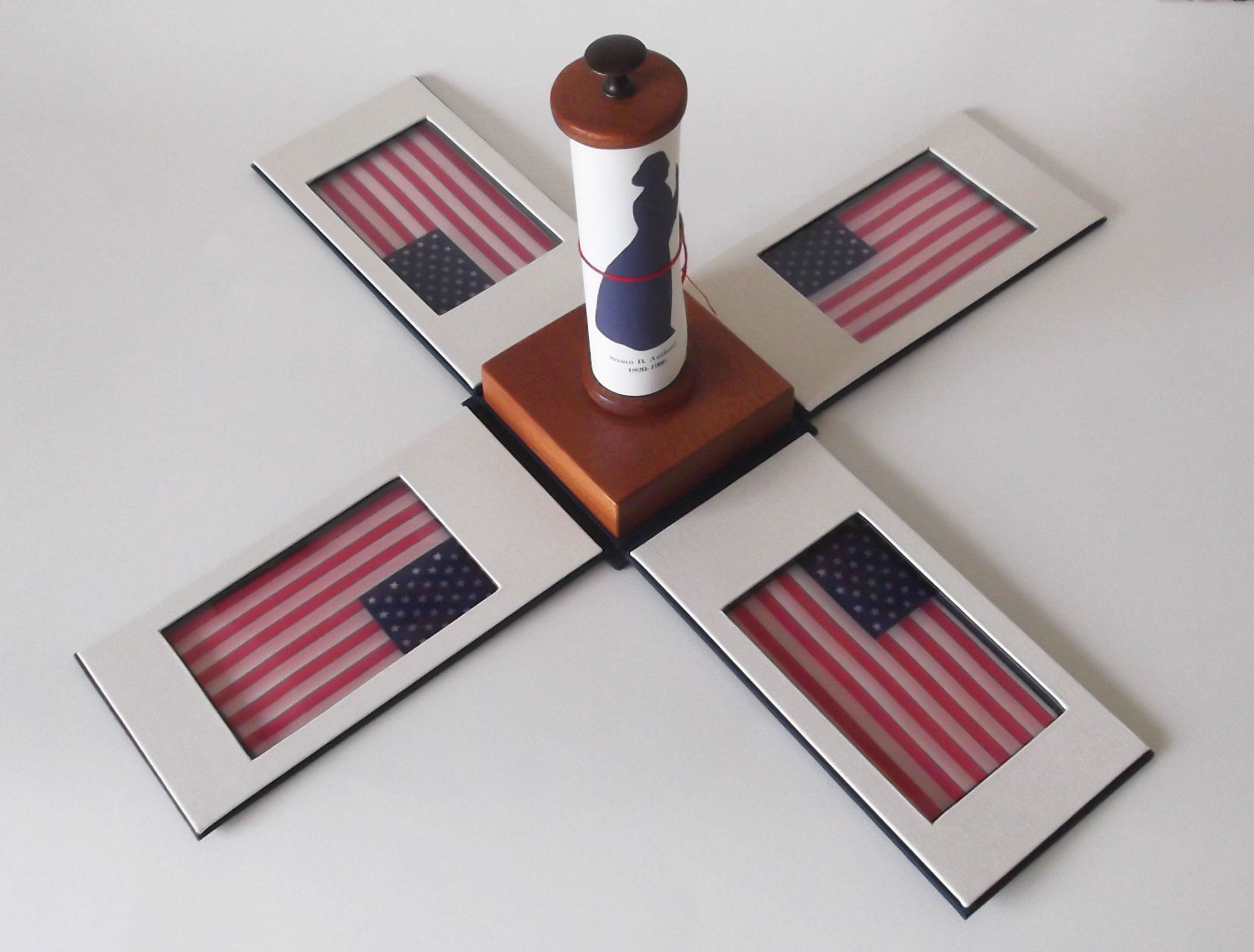
Another book box creation of Susan’s is entitled Almost There and was part of the Philadelphia Atheneum exhibition From Seneca Falls to Philadelphia: Women of the Centennial.

Susan emailed the colophon printed on the inside of the lid of Almost There. A great insight into the work:

« The story of how the idea came to me is interesting. I looked at the call for entries for the Atheneum show, and thought, "No, I'm not going to enter that; it's political and not up my alley." But one night I saw the book in a dream--the scroll encased in a "jail" box, with windows made of upside-down American flags, the women visible on the outside of the scroll appearing to be "captured" in jail (Susan B. Anthony was jailed for attempting to vote), and the inside of the scroll printed with the Declaration of the Rights of the women of the United States (presented by the National Woman Suffrage Association on July 4th, 1876 at the Philadelphia Centennial). The call for entries required a design for a book to be made specifically for the show. I drew my dream book and sent it in, and it was accepted. Then I had to figure out how to make the book! Fortunately my husband, Gilbert Ruff, is a cabinet maker, and he constructed the wooden scroll and its plinth. I made my first "exploding box with windows" for the case, printing the American flags on acetate and gluing them between the double frames of the windows. Quite a job! I created the scroll itself by researching the suffragists and finding images of them from which I drew and created silhouettes. Not all the important women fit onto the scroll, so I also included a list of the ones whom I could not create images for. On the back of the scroll I printed a reduced copy of the entire Declaration of the Rights for Women »—Susan Bonthron

© 2013 Susan Bonthron, Almost There

© 2013 Susan Bonthron, Almost There

© 2013 Susan Bonthron, Almost There

© 2013 Susan Bonthron, Almost There

© 2013 Susan Bonthron, Almost There

© 2013 Susan Bonthron, Almost There

© 2013 Susan Bonthron, Almost There

© 2013 Susan Bonthron, Almost There

© 2013 Susan Bonthron, Almost There

© 2013 Susan Bonthron, Almost There


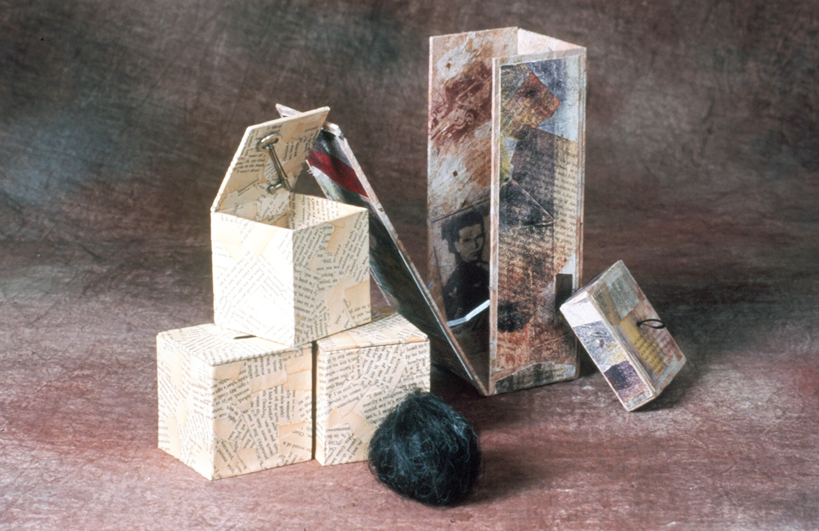
Book Artist Kerry McAleer-Keeler also creates book boxes. I enjoyed viewing Boxed Spirits: Franny, Zooey, and Everyman a box structure inspired from the J.D. Salinger novel Franny and Zooey and the allegorical tale of the Everyman.

Inside the box structure one finds photographic transfers amongst a monotype printed background. The transfers represent the two main characters as children to their adulthood. Kerry used period family photographs as source material for the images. The main box also houses 3 smaller cubes that are containers for horse hair spheres that reflect the spirits of Franny, Zooey, and all of us. The piece exemplifies the spiritual search for Franny in the novel and for all of us in real life.   

© 1999 Kerry McAleer-Keeler, Boxed Spirits: Franny, Zooey, and Everyman, part of the rare book collection at the Gelman Library, George Washington University in Washington DC

© 1999 Kerry McAleer-Keeler, Boxed Spirits: Franny, Zooey, and Everyman, part of the rare book collection at the Gelman Library, George Washington University in Washington DC


How do you express yourself and your ideas?

Bah! Grumble! Grumble! Got to take care of a printer misfeed. I’m printing business cards, another hat I’m wearing today, so have fun creating.


Finding Home

Being alone.

Finding Home. 

I moved many times since 2004, my last move was last July to Boise, Idaho. I love our little house, It's cozy and simple, so simple we have no sofa. Why not you ask? Because someone miscalculated the moving truck's cubic feet!

I’m always reluctant to move and our new place still doesn’t feel like home. Though I have a sense of belonging in my half measure studio.

I can no longer ignore the challenges of this move. I compare the aspects of my life to the years before Idaho. Heck! let's face it before 30 years ago.

I dread the future and transitions are difficult. Right now as we say in Canada, “slow as molasses in January” but it’s March! 

I have not found myself or the essence of our home/city, I’m uncomfortable. With time and age, my way of life is different. What I want is different and how I want to express myself is different.

What’s next? Who knows! It’s getting to the other side that’s bumpy! Driving over a cliff, bumpy! How do you cope with change?

“Masquerading as a normal person day after day is exhausting”—my motto for this month. While my husband goes by “Sometimes you just have to leap, and build your wings on the way down.”—Kobi Yamada

Michael has always built his wings as he travels. I hate that!!

Before the molasses came, I took my creativity and published an artists’ book that speaks of being alone, missing my country and missing my culture. I present to you Finding Home.

© 2016 Louise Levergneux, Finding Home

© 2016 Louise Levergneux, Finding Home

© 2016 Louise Levergneux, Finding Home

© 2016 Louise Levergneux, Finding Home

© 2016 Louise Levergneux, Finding Home

© 2016 Louise Levergneux, Finding Home

© 2016 Louise Levergneux, Finding Home

© 2016 Louise Levergneux, Finding Home

After taking a writing workshop with Paulann Petersen last summer, I wrote the poem for Finding Home.


At home, the sun kisses the foothills 

and transforms 

the horizon with vivid colours. 


Finding home...

Where do I belong?


Longing to be back home, 

where the maple leaf 

soars above the hills 

and 

la langue Française

de la belle province 

is recognized,


Dreaming of home, 

I wake to the sounds 

of coyotes 

and

live where the light shines till late

—the days are long, 

the country wild and free,


A sense of place, 

a sense of belonging, 

je me souviens

de la fleur de lys, 

my roots are deep, 

back and forth 

as a butterfly flitting 

across the miles. 


Finding home...

Where do I belong?—© 2016 Louise Levergneux


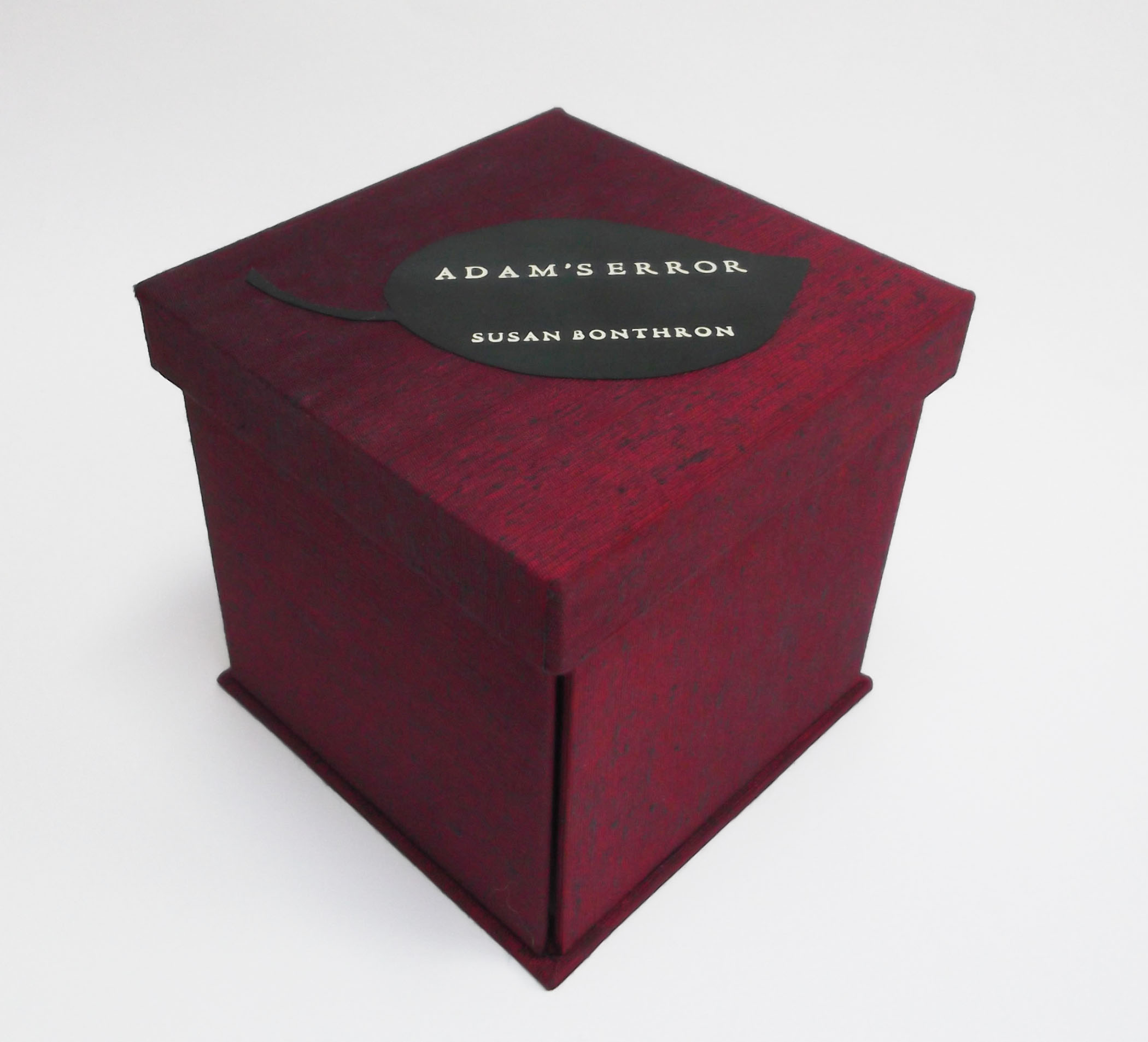
I have made two explosion boxes with the help of Susan Bonthron. I discovered Susan’s Adam’s Error, Only One Bite the day I was exploring 23 Sandy Gallery’s website. Soon after I emailed Susan to guide me to a tutorial. To my amazement, Susan emailed me her instructions. I made an 8 inches square box for my first explosion box. Never start big!!

© 2014 Louise Levergneux, Equinox,Time

© 2014 Louise Levergneux, Equinox,Time


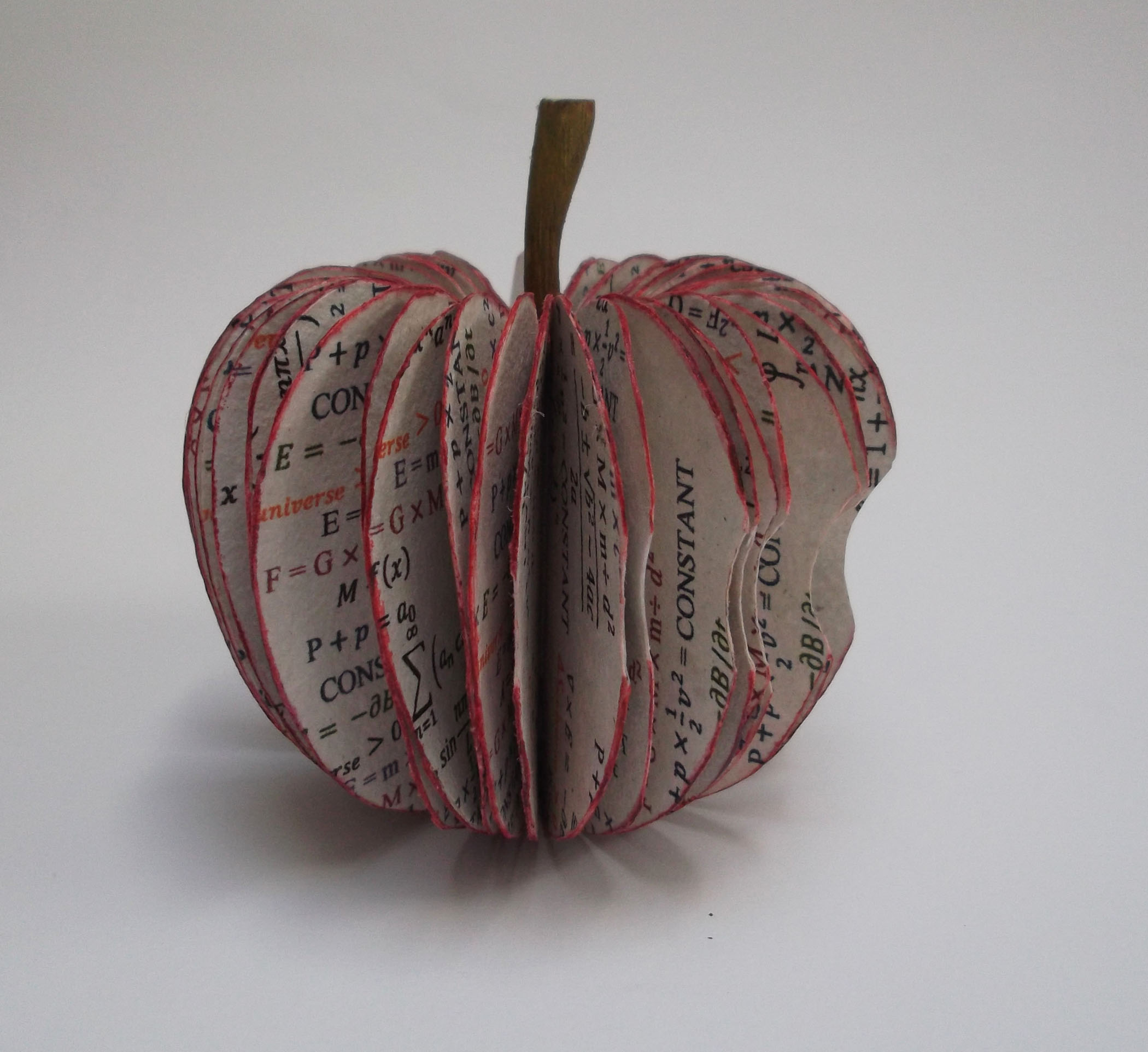
Susan’s artist book Adam’s Error, Only One Bite is about the myth of Adam in Eden, the intersection of belief and reason, and the mathematical discoveries that represent the ‘bites’ each scientist or mathematician tastes of the whole mythical fruit that represents what can be known of our universe. Susan’s choice of mathematicians was inspired by Michael Guillen’s book, Five Equations that Changed the World: the Power and Poetry of Mathematics (New York: Hyperion, 1995).

© 2012 Susan Bonthron, Adam’s Error, Only One Bite

© 2012 Susan Bonthron, Adam’s Error, Only One Bite

© 2012 Susan Bonthron, Adam’s Error, Only One Bite

© 2012 Susan Bonthron, Adam’s Error, Only One Bite

© 2012 Susan Bonthron, Adam’s Error, Only One Bite

© 2012 Susan Bonthron, Adam’s Error, Only One Bite

Susan works under the imprint Otter Pond Bindery.

Does your art decode the passage of time?

Visit My Studio

Do you enjoy visiting artists’ studios? Spend time in another world? I do, I love it! 

An artist’s studio gives you insight, walls filled with inspiration, memorabilia, writings, flyers, invitation cards... One notices the workflow, the equipment collected through the years, the stack of papers, the assortment of book cloths...

I love small thingamajigs sitting on shelves or ideas pinned to boards. You can visualise the beginnings of a final piece, you can sense the artist’s mind cogitating.

Going from one project to another, how do you dust off your worktable and unburden your mind for a new project?

My mind gets clogged around what I call crunch time—the stretch between finishing touches, call for entries, the prospectus for new books! I can’t brainstorm for this post. No bright ideas to write, aucune idée, nada, zero...

Let's take a break and take this opportunity to visit my messy studio. My half studio not big gets messy fast. I had to move out a filling cabinet that supported my old Epson 2200 to make room for this—

 My Epson 2200 sits on a plastic bin to print business cards today.

My Dahle 554 cutter has found another calling—a bench for Finding Home's different elements of to be assembled.

cutter.jpg

My tools are full of glue so cleaning is a priority. How do you keep your tools clean as you work? Any advice is good!

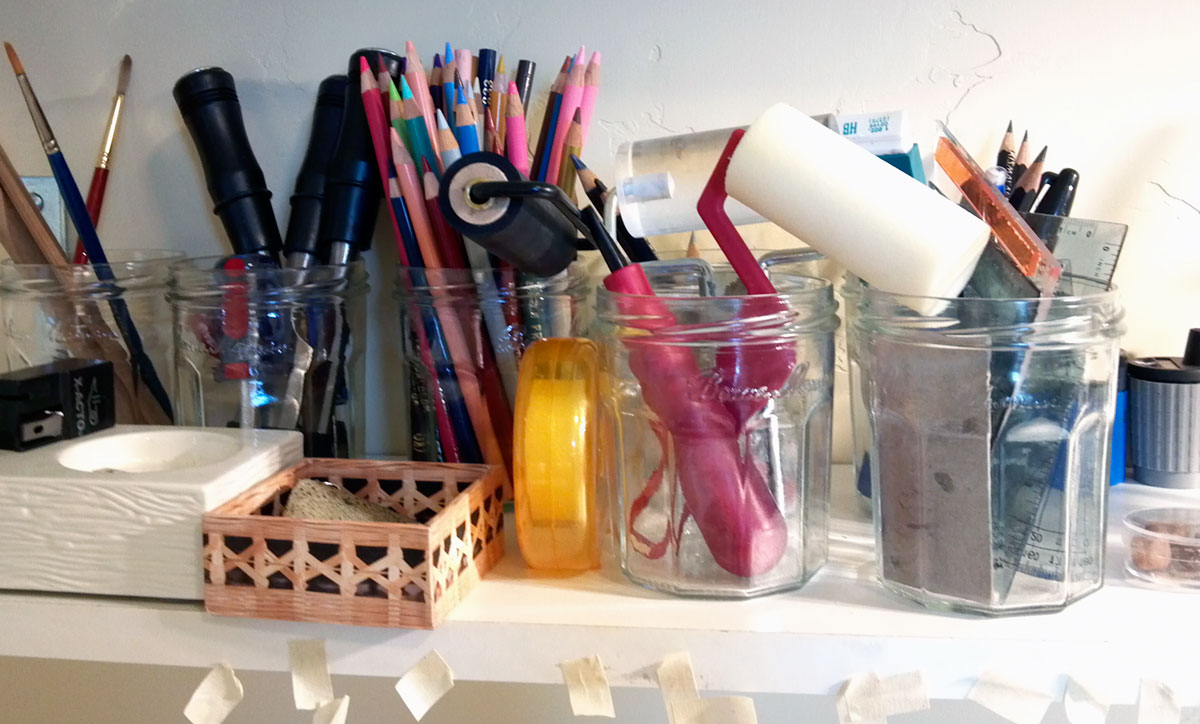
At least, my small tools are in place.

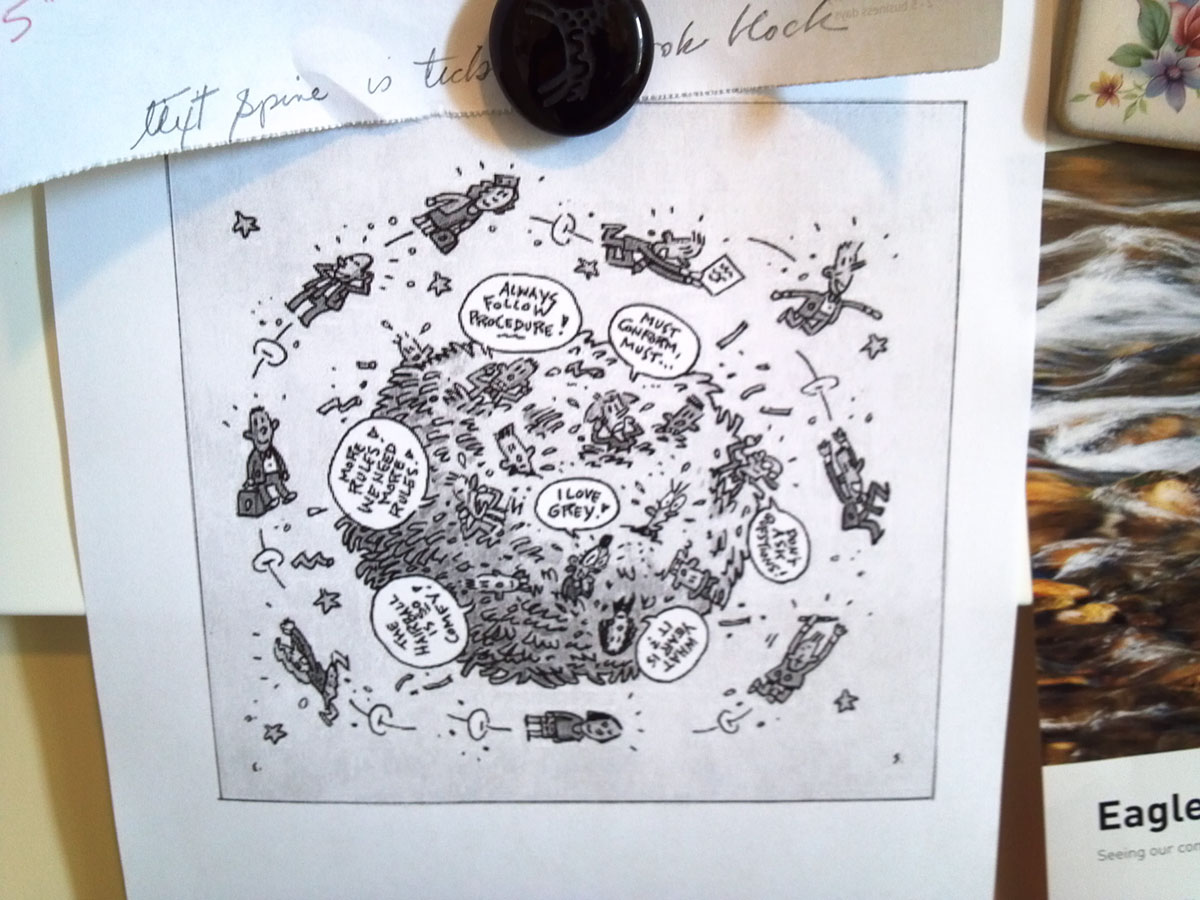
My walls are full of artwork that inspires me but since the world is spinning fast, this cartoon reminds me to take it easy.

And the results of my labour, books and more books! How big is your inventory? 

Do you have a plan to organise your archives? Do you plan for the future for what happens to your legacy?

Work awaits...

More Drawings

Last week, I re-drew the final element in Tinkercad for my artists’ book Finding Home. Major problems were surfacing, and the results were not good. Defeat, no way! This simple structure can be 3D printed, I’m sure.

My solution was to break down the sections of my structure into 7 pieces and once printed I would glue the sections together. The question remained, will the parts fit together? I’m hoping it works! 

Friday, I travelled one more time to Unbound to retrieve my work. Well, surprise! surprise! every part fit, amazing!! Persistence as always served me well.

The slipcase for my book Xtraction was also a success. My strategy worked. I’m excited to finish these projects. J'ai le vent en poupe ! I’m on a roll! as they say. I will elaborate on this project later, but here is a photo of the result of the last 3D print of Xtraction's slipcase.

© 2016, Louise Levergneux, 3D printed slipcase for Xtraction


Last week we visited the compelling Clock Drawings by Adrian Göllner. One more drawing from the series is worth looking into because of it’s interesting history.

The MGM blockbuster movie Ben Hur made its screen debut in 1925. Borrowing on its success, the Westclox Clock Company designed a handsome, roman-style alarm clock, which they called the Ben Hur and began marketing in 1927. The Ben Hur clock in my collection was purchased at Rideau Antiques in the Ottawa Valley, so it had likely been the property of a farm family in the vicinity. A mark on the reverse indicates that it had been serviced in 1942, but sometime after that it ceased to run and a repairman scavenged its winding keys. The clock is in poor condition and the spring was broken, but the alarm spring was still partially wound. I suspended the clock movement above a piece of carbon paper and then triggered the alarm. The alarm hammer struck the surface for several seconds. A decidedly men’s-style alarm clock, one might conclude that it was a birthday or Christmas gift for the father of a household. Perhaps he had traveled to the big city, seen the movie and now his family honoured him with a clock of the same name. If that is the case, then memories of the movie and thoughts of his family were an inextricable part of the energy coiled on the alarm spring and which made the marks upon the paper.

© 2010 Adrian Göllner

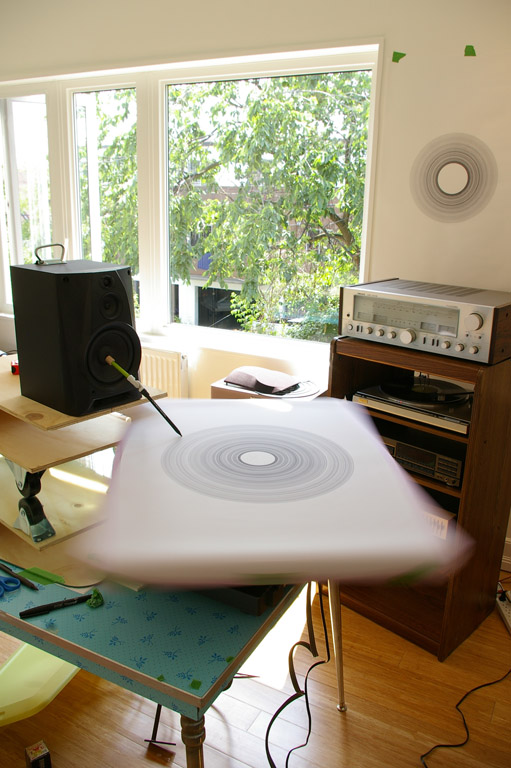
Another series, another device. Adrian’s project the Norwegian Wood Drawings configures a turntable so that the vibrations of the needle are transferred onto a drawing surface.

© 2012, Adrian Göllner, Norwegian Wood Drawing Mechanism

© 2012, Adrian Göllner, Norwegian Wood Drawing Mechanism

 A vinyl recording plays on the turntable causing the speaker’s woofer and attached pen to vibrate. The pen is slowly drawn backward across the drawing surface that itself rotates at 33 1/3 rpm.

Adrian’s intention was to divine the shape of John Lennon's loneliness from the grooves of his old Beatles albums. 

“A brilliant but troubled song songwriter, rejection and self loathing underlie many of Lennon's most enduring songs: Girl, I'm a Loser, Help and Norwegian Wood. Speculative? Absolutely. But even the consideration that the lines before us contain the essence of John Lennon’s loneliness make these drawings both curious and compelling.”—Adrian Göllner

© 2012 Adrian Göllner, Come Together, ink on vellum, 34 x 22 inches

© 2012 Adrian Göllner, Come Together, ink on vellum, 34 x 22 inches

© 2012 Adrian Göllner, I Want You, ink on vellum, 34 x 22 inches

© 2012 Adrian Göllner, I Want You, ink on vellum, 34 x 22 inches

© 2012 Adrian Göllner, Across the Universe, ink on vellum, 34 x 22 inches

© 2012 Adrian Göllner, Across the Universe, ink on vellum, 34 x 22 inches


The studio of James G. Jenkins is part of the Water Street Studios an artist co-op in Batavia, Illinois. Lucky to meet this talented artist, luckier to have him as a friend.

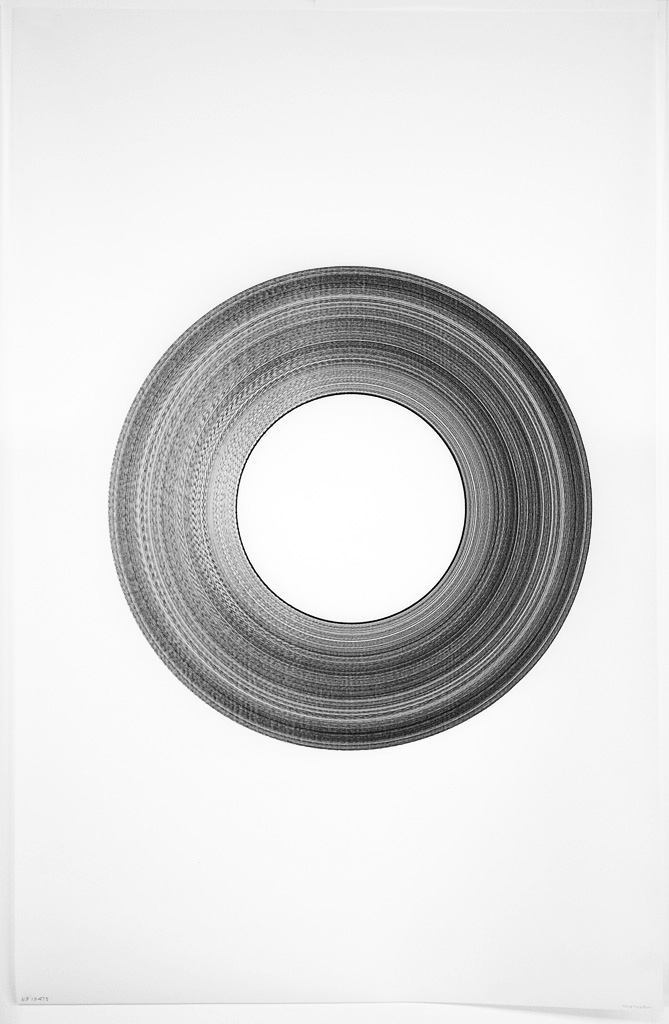
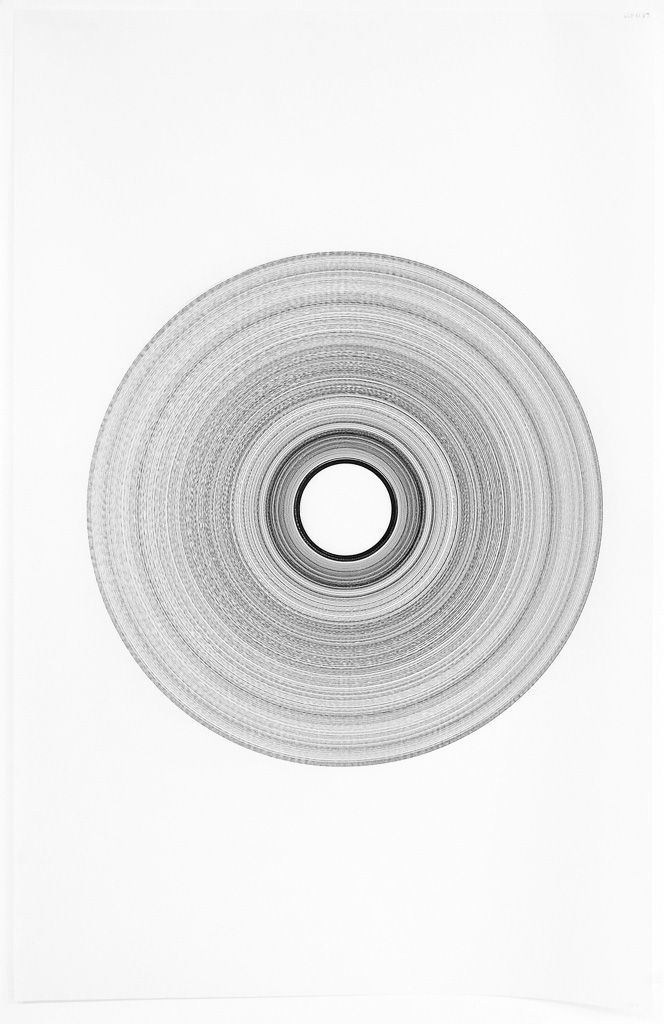
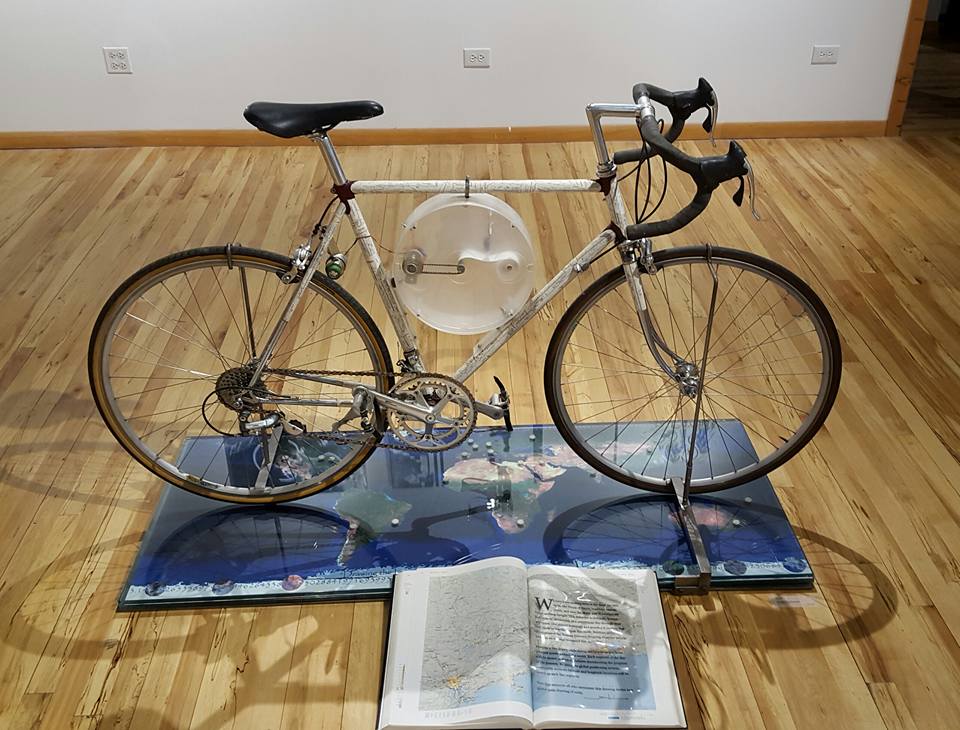
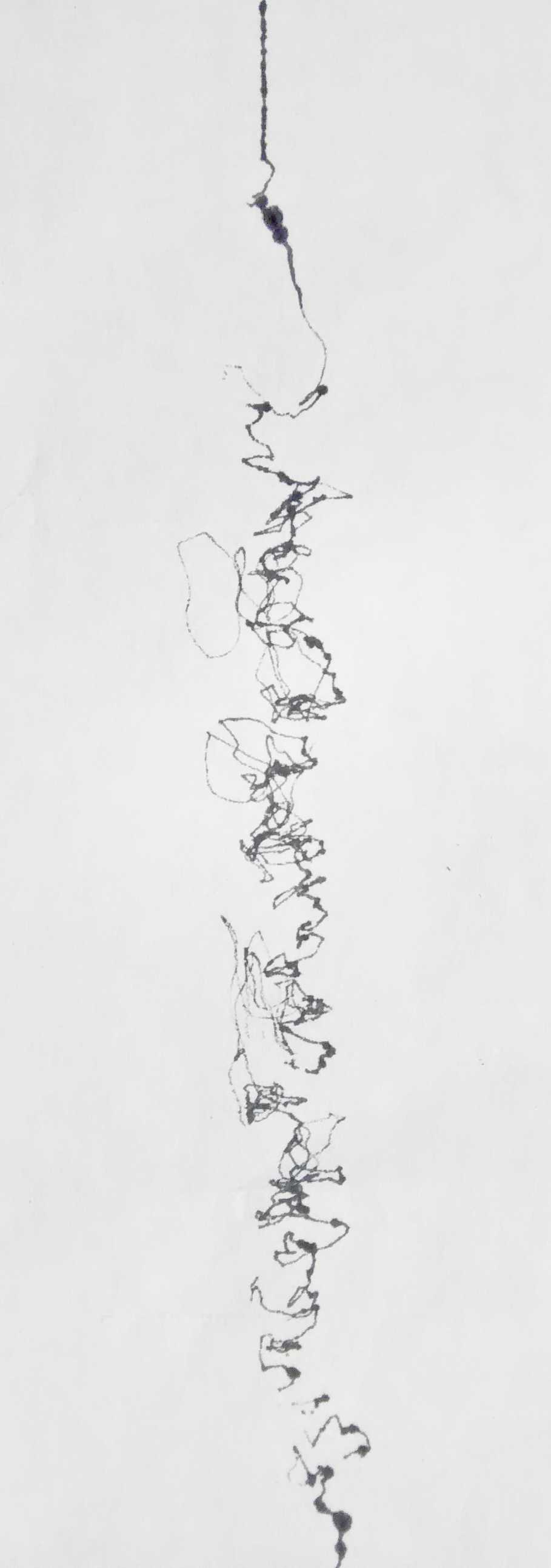
Drawing the Line(Somewhere) was made on one of the many bicycle paths around Batavia, Illinois. The reason for building this device was to "connect the dots" around the world to all areas suffering from climate & environmental problems. "We all must "draw the line" on something," says Jenkins. I use this device and performance to demonstrate it. 

© James G. Jenkins, Drawing the Line(Somewhere)
© James G. Jenkins, Drawing the Line(Somewhere)

James also notified the Museum of Contemporary Art in Chicago that he would be "drawing rings around them." This drawing is from that performance.

© 2004-2006 James G. Jenkins,  Drawing the Line(Somewhere), detail of drawing 

© 2004-2006 James G. Jenkins,  Drawing the Line(Somewhere), detail of drawing 

James’s sculptures provide a theme for both intellectual and visual curiosity. They contain road maps directing the observer through a process of distillation and fusion of contrasting ideas and investigative humour. James a genius at work is always happy to show you around his studio and direct you to the actual installations around Illinois. If you are in Illinois, James's studio is worth the visit!


These wonderful well thought out art pieces leave me with deep thoughts...