From Initial Spark to the Studio Bench: October Studio Notes

The Arizona summer made it clear who was in charge last month. The relentless heat kept me indoors, giving me a quiet excuse to retreat deep into my studio and pour my energy into my upcoming artist book, Eudaimonia.

Even with the usual administrative noise that comes with keeping a studio running, my mind kept drifting back to the tactile reality of the object itself—how it will feel in a reader's hands, how the structure will hold the story.

The idea for this book first took root early in 2024. Ideas often need time to settle before they reveal how they want to be made. Over these past months, that initial spark of imagination has given way to active discovery—a shift from dreaming to the frustrating, beautiful work of finding the exact physical materials to carry the emotion through.

The project explores the changing landscape of a lifelong relationship across three distinct volumes. To ground this narrative, I chose a French Fold format, where the hidden inner folds reveal solid blocks of color.

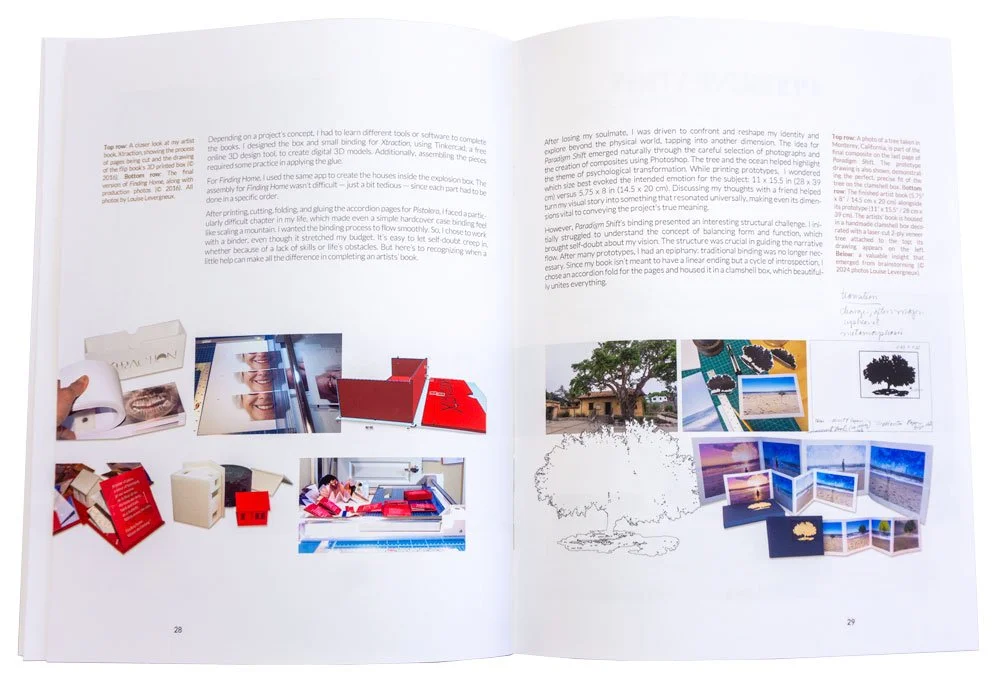
Because the paper must yield to tight scoring without cracking or exposing raw white fibers, finding the right paper became a central puzzle. I initially gravitated toward Hahnemühle Photo Rag Book and Album (220 gsm) for its smooth, tactile surface. But cotton rag’s long fibers and coating, while gorgeous for single pages, make it prone to cracking along a sharp crease when heavy ink is involved.

So I turned to Moab Lasal Matte and Red River Premium Matte. Alpha-cellulose pulp papers take deep ink without curling or cracking along the fold. At first, I loved Lasal’s stiffness—it let the book stand boldly on display, showing off those hidden inner folds. But as I kept handling it, something felt wrong. It was too rigid, creating a heavy structure that felt out of sync with the fragile, delicate idea behind the book.
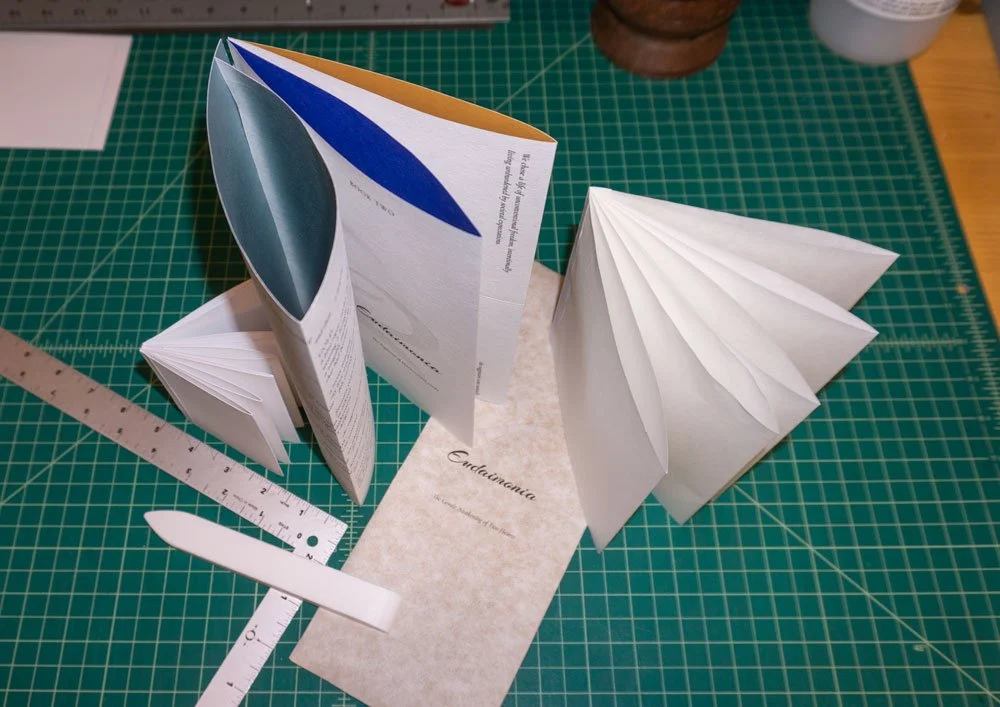
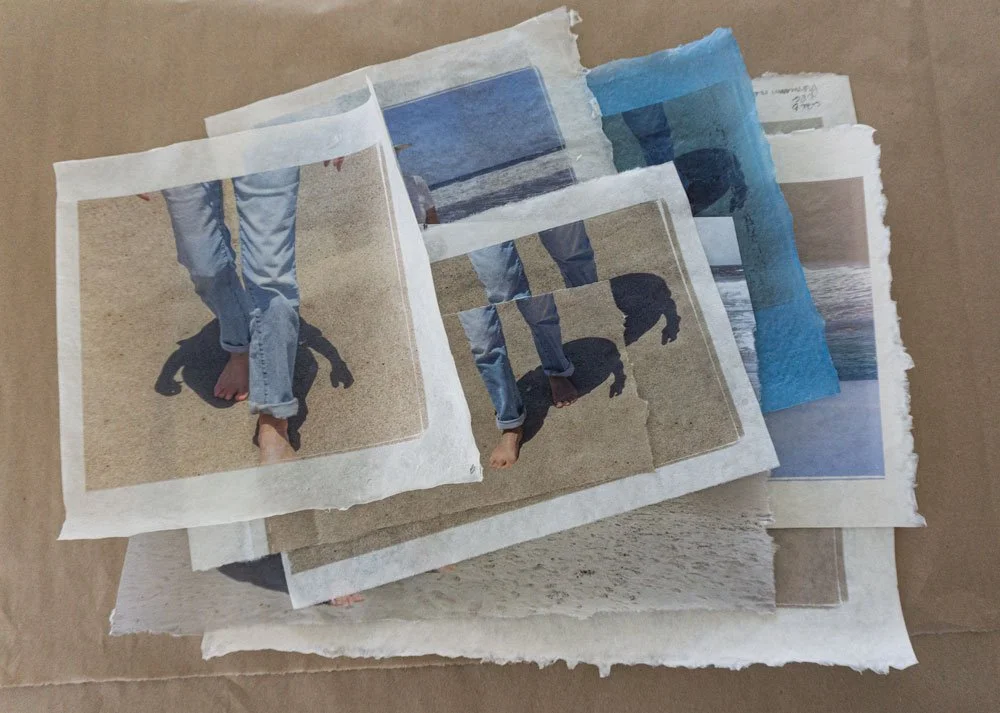
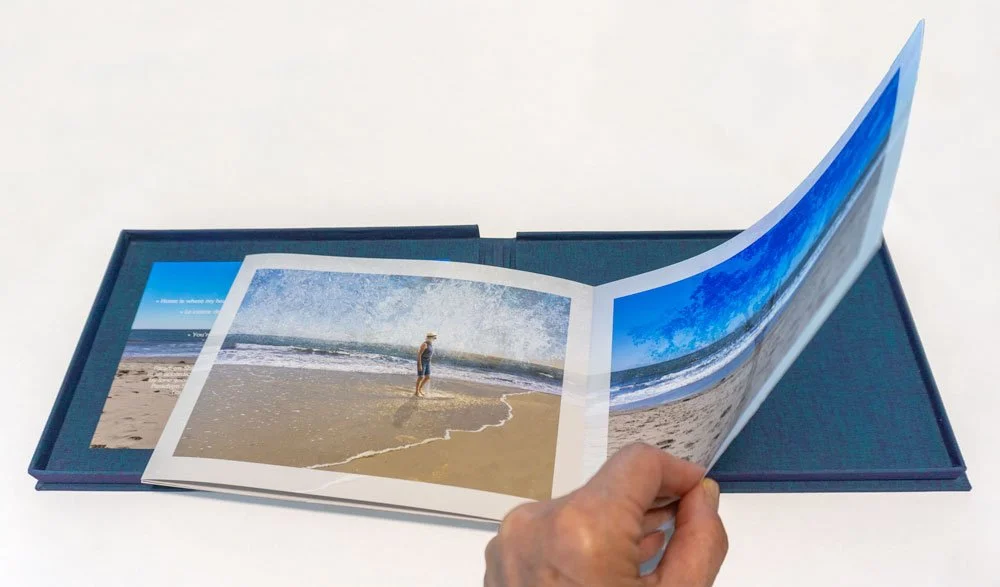
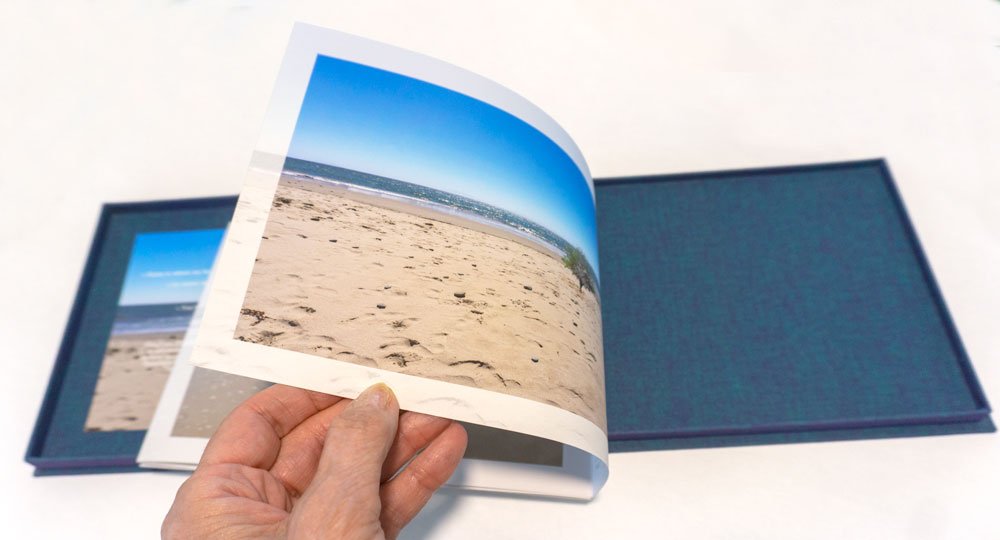
© 2026 Louise Levergneux. Studio mock-ups demonstrating the French Fold behavior—testing paper response along the spine folds and previewing the interior palette.

That realization sent me back to the drawing board. I started experimenting with paper after paper, searching for something that balanced structural integrity with quiet grace. I’ve landed on Asuka 70g from Hiromi Paper. It has a lovely, subtle body that supports double-sided printing, but page turns feel soft, intimate, and inviting. I’m currently waiting on the right paper dimensions to print a full prototype and see if my intuition holds up.

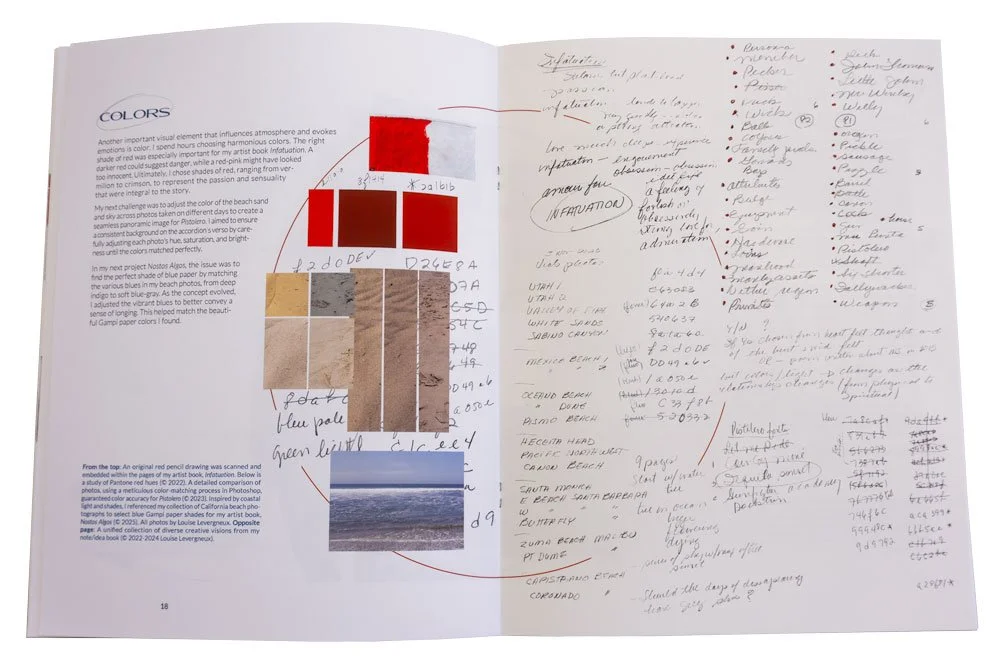
Alongside the paper trials, I’ve been searching for the precise colors to peek from the folds—three primary hues to reflect the emotional passage of time.
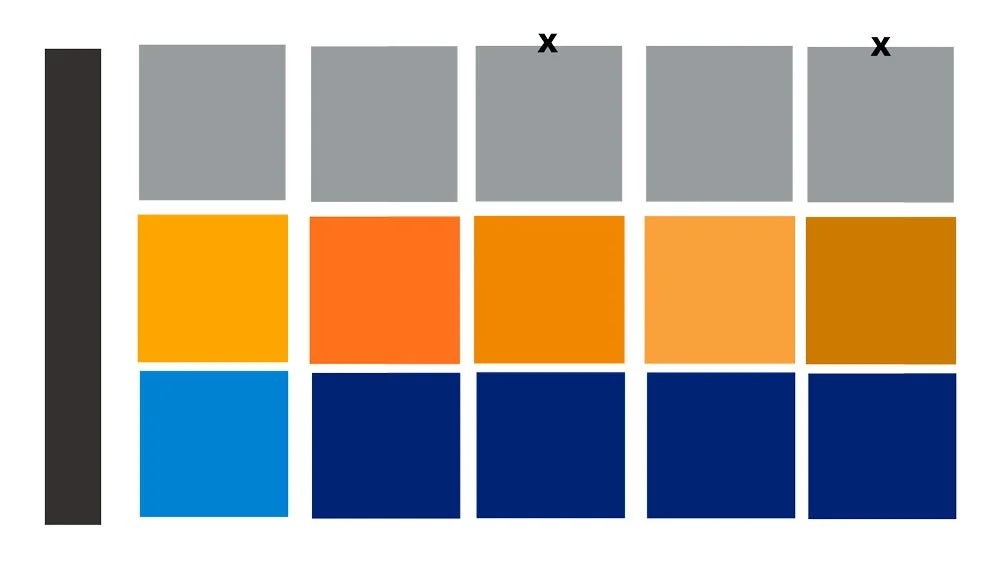
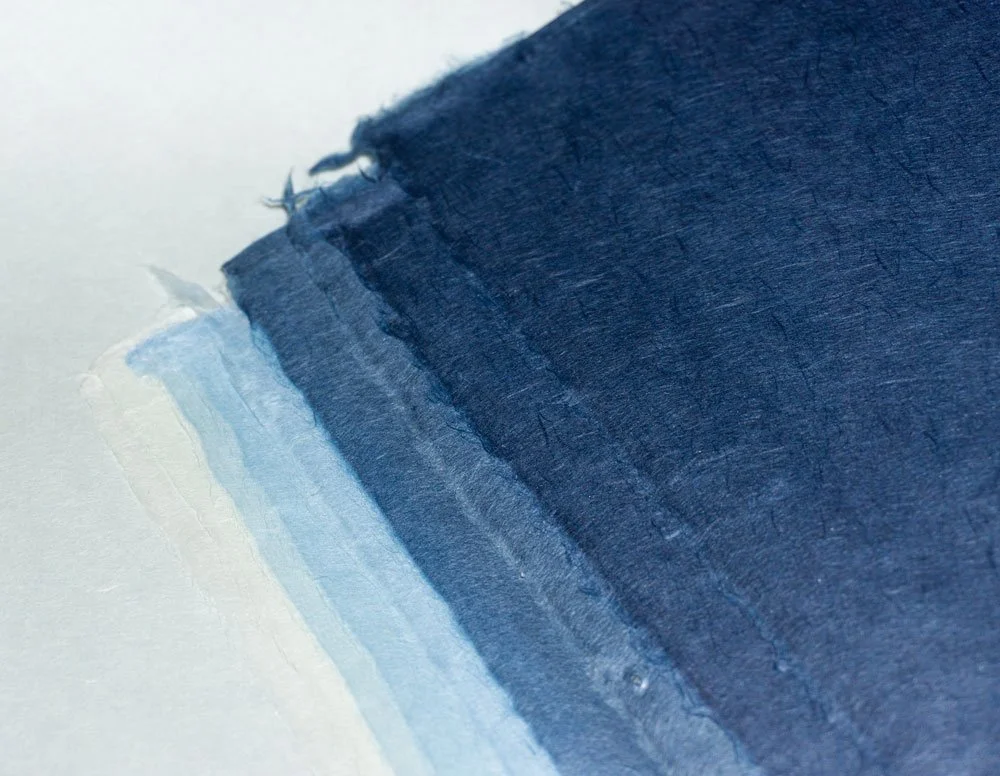
© 2026 Louise Levergneux. Color study for the three-part narrative. Testing five tonal variations across grey, warm amber, and deep blue to capture the shift of a lifetime relationship.

I’ve been testing variations in tone and value—like the grey, amber, and deep blue swatches above—trying to find colors that quietly breathe under the text and poetry rather than compete with them. The next step is seeing how these inks actually settle into the surface of the paper.

As autumn settles in, the studio is coming alive with incoming materials—some to complete the edition of Nostos Algos, and others dedicated to this new work. I’m especially looking forward to working with Zoë at Cave Paper again to source its rich, thick flax paper.

After months of testing, searching, and waiting, the planning is starting to quiet down. Now comes the best part: pulling up to my desk, opening Photoshop, and figuring out the best layout to express what’s been in my head for so long.
How Artists’ Books Make Social History Personal

The longer I make artists’ books, the more I understand them as ways of thinking through time. They allow me to notice how feelings change, how personal experiences stay with us, how places become familiar, and how language moves around what it cannot quite express.

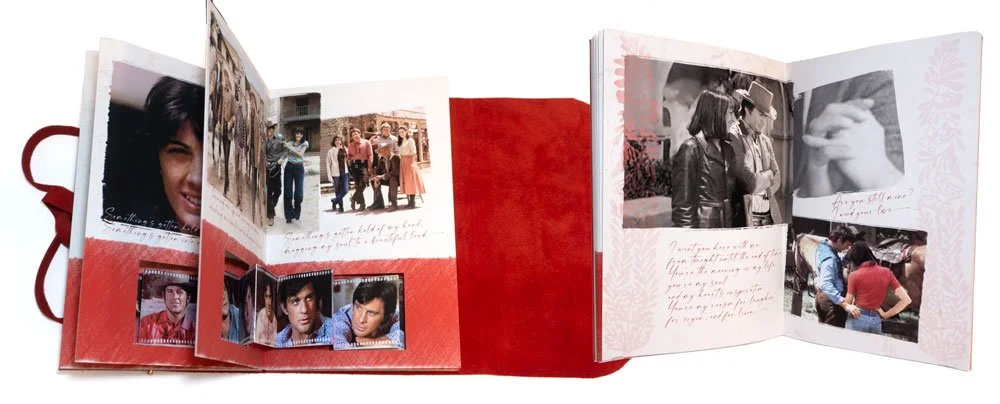
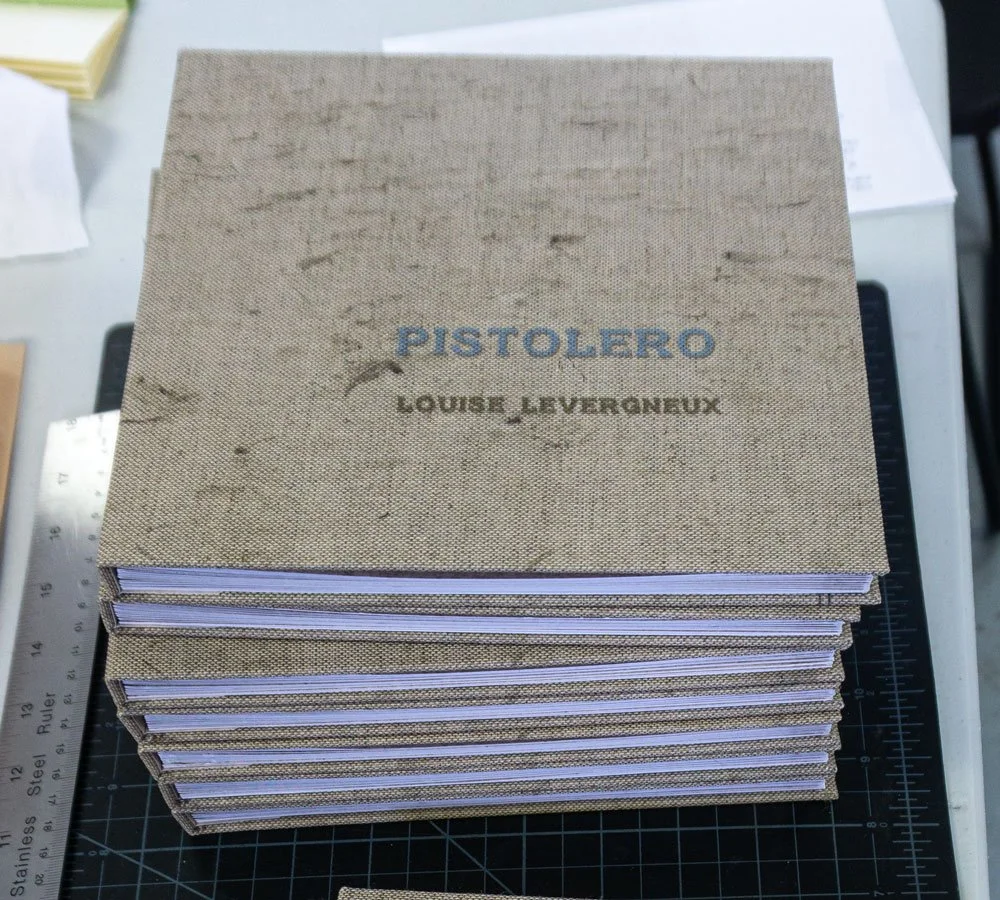
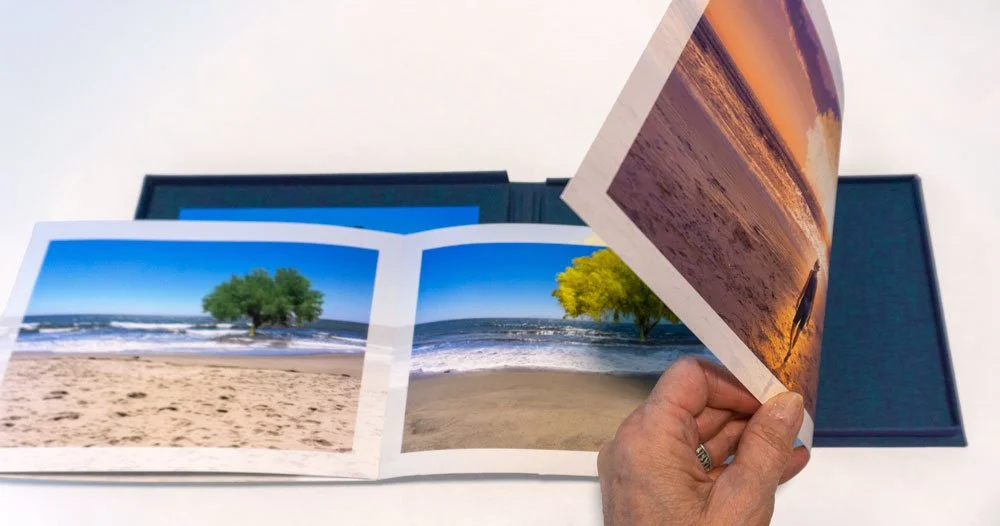
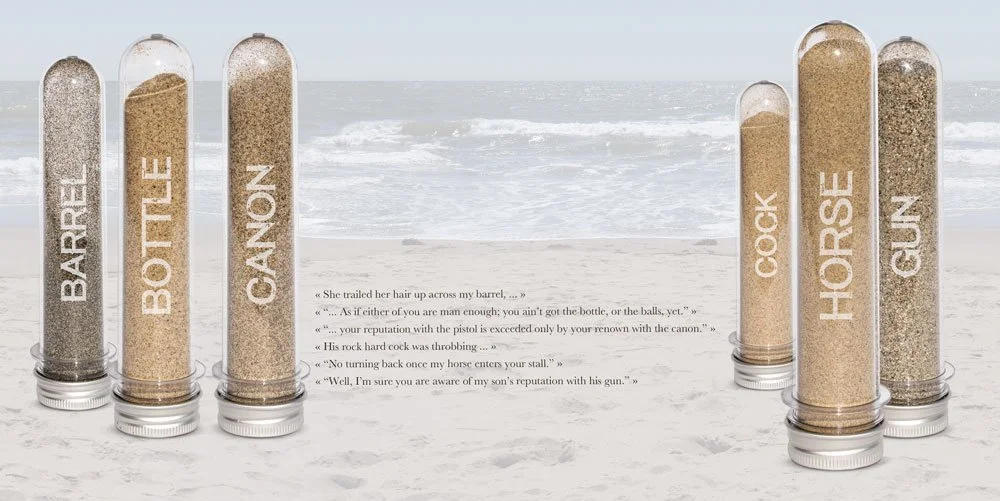
My recent books have brought me closer to the textures of everyday life: memory, relationships, media, place, and personal experience. These are the things that shape how we move through the present. Infatuation explores the way media can shape our earliest ideas of love. Pistolero brings older travel imagery into contact with digital fan culture. Paradigm Shift considers how displacement can change our sense of home and belonging. The images below offer glimpses of how these ideas take shape through sequence, material, and form.

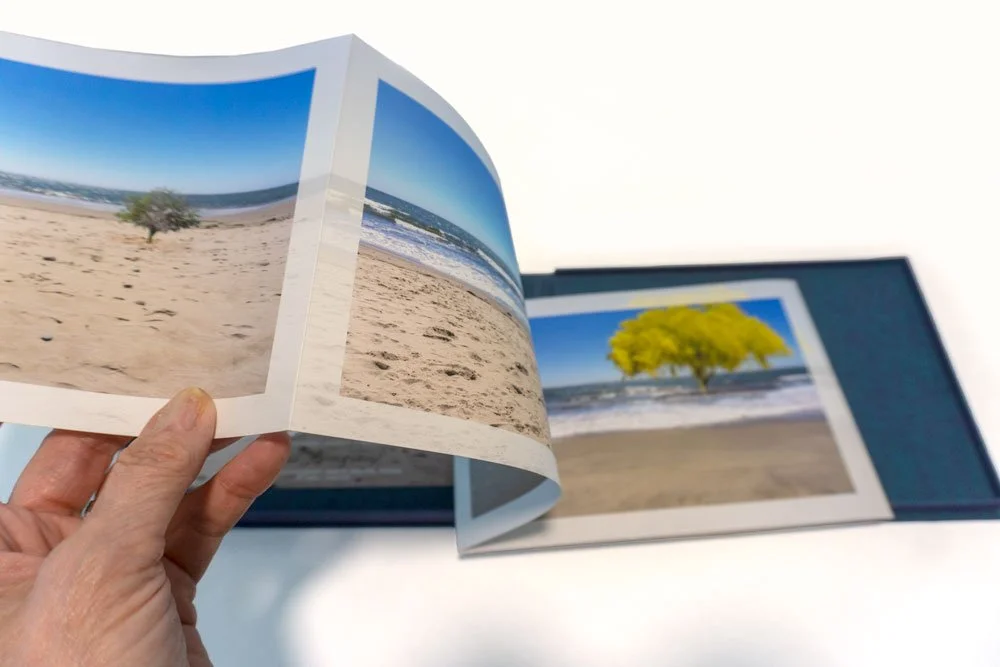
© 2025 Louise Levergneux. Paradigm Shift is an accordion book composed of four double-sided panels that charts a transformation in my understanding of home and identity.

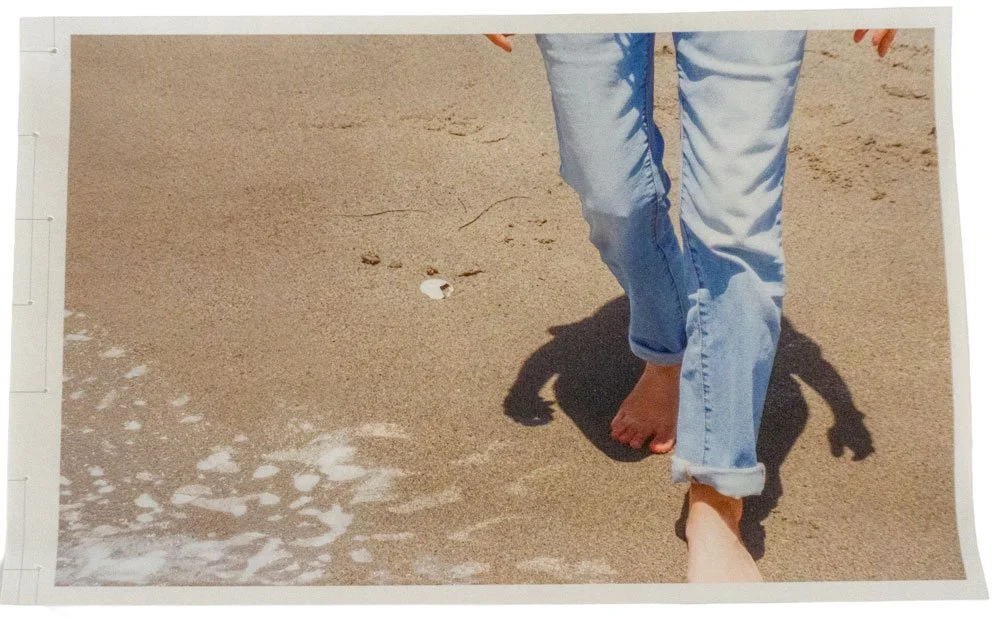
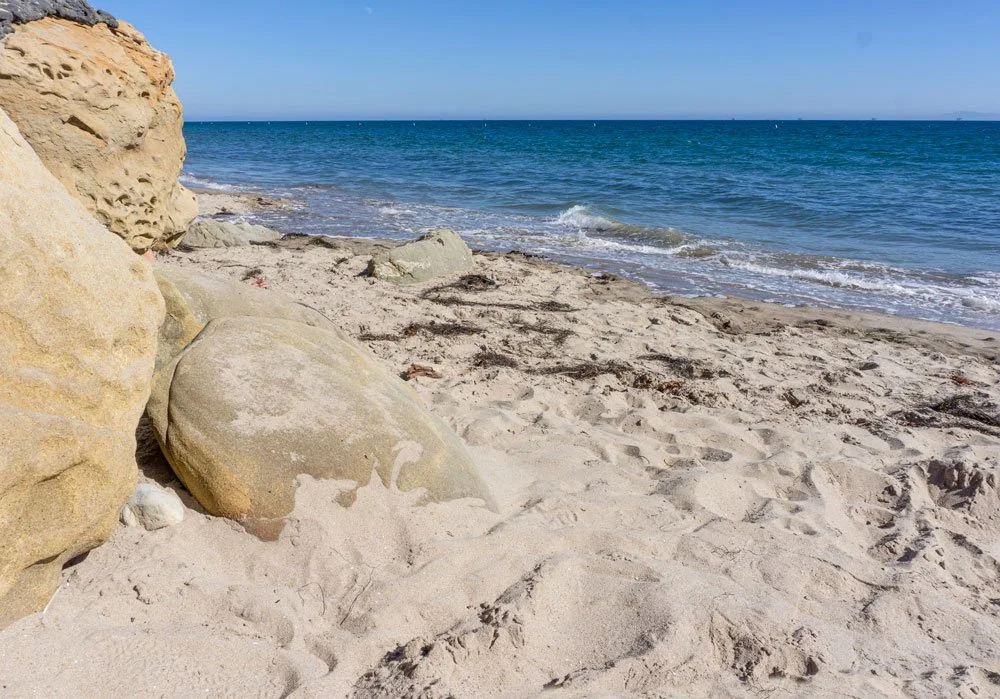
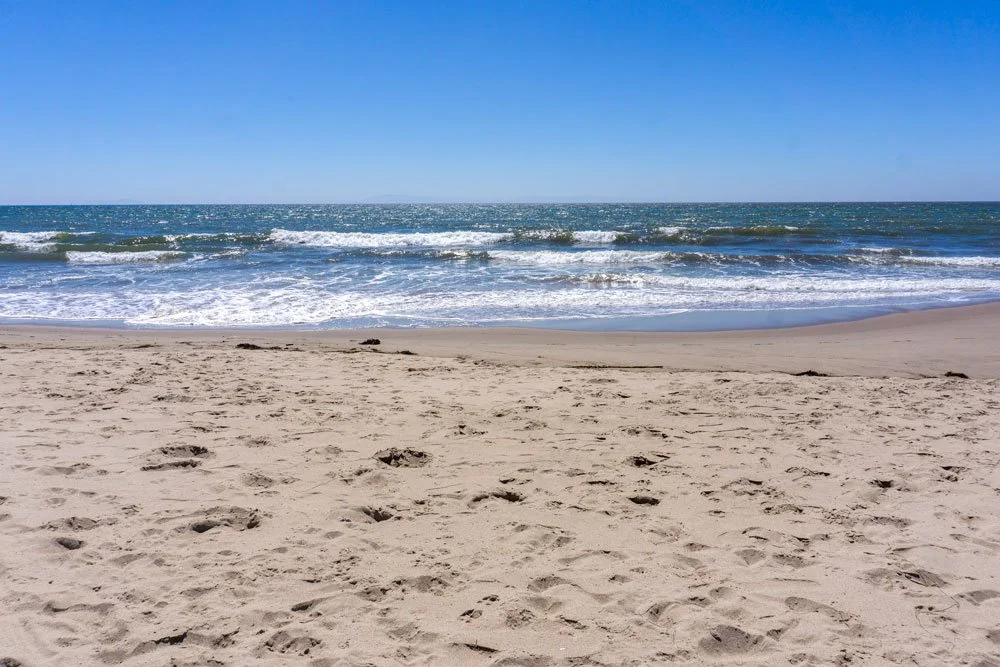
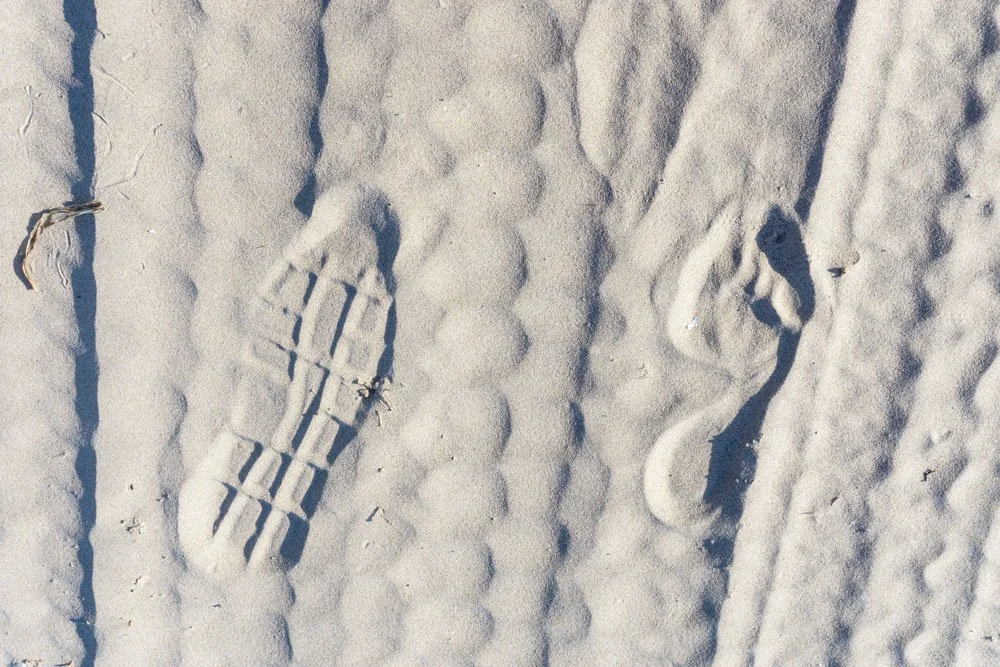
© 2023 Louise Levergneux. In Pistolero, the sensuousness of sand and its visual association with the male form create a fresh perspective on language and invite a whimsical, tongue-in-cheek narrative.

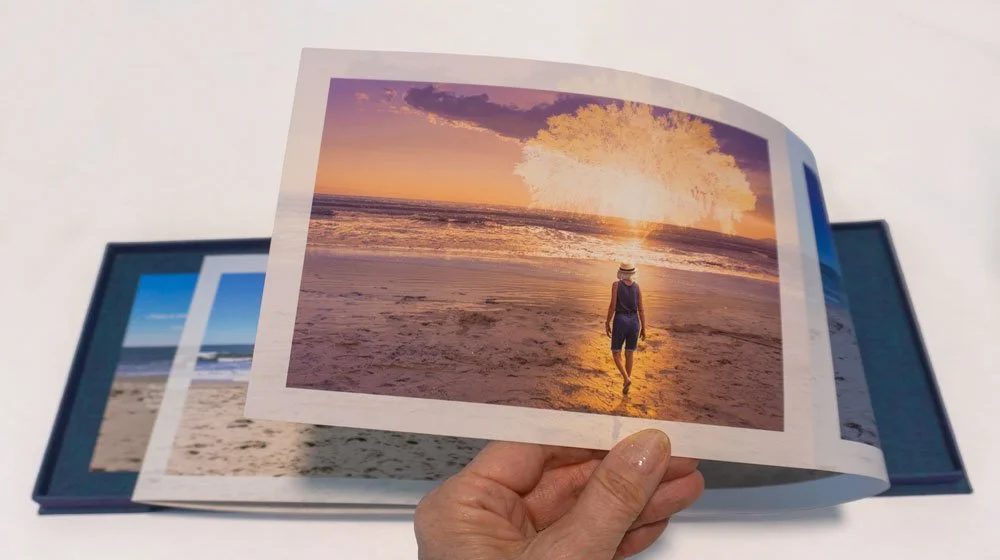
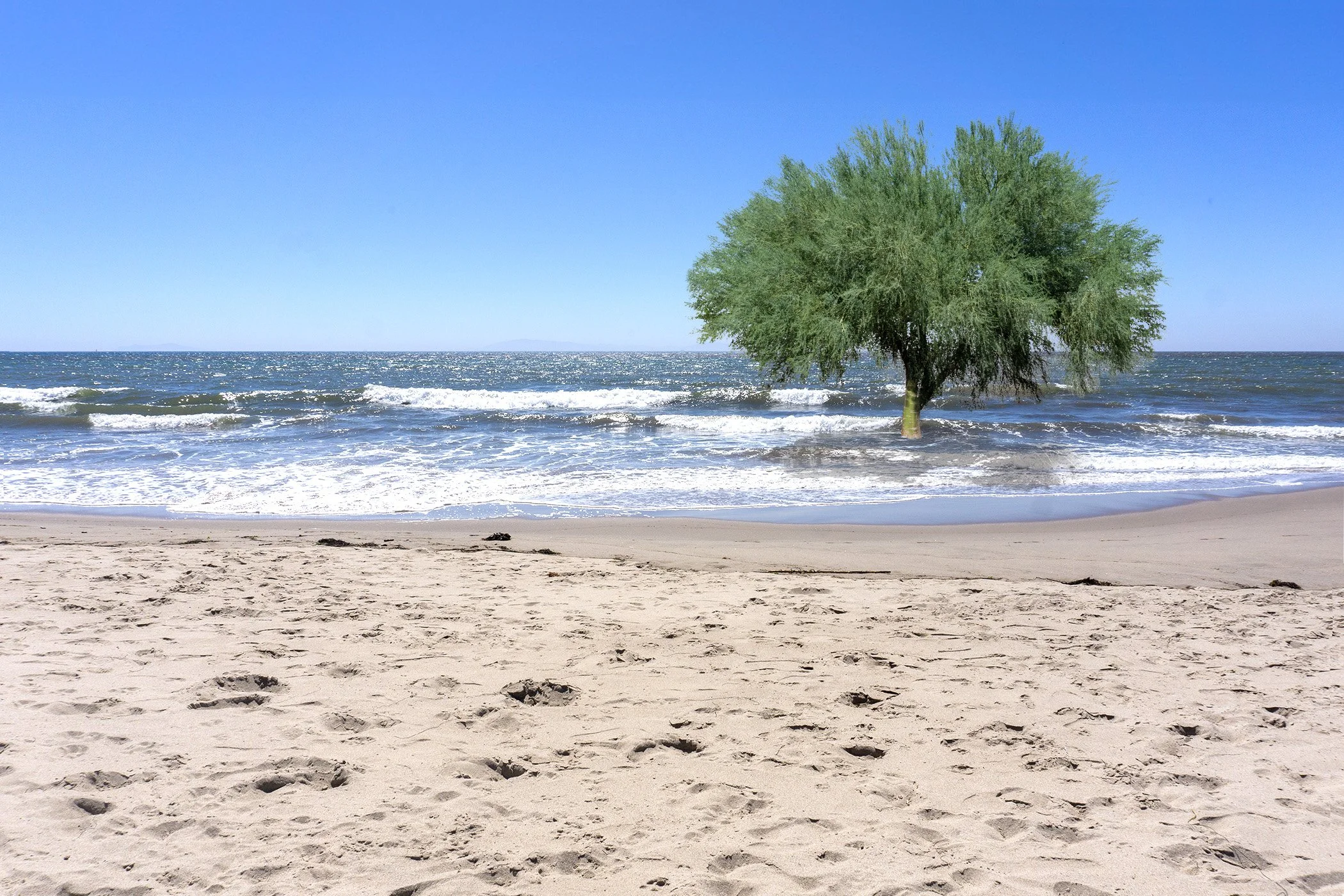
© 2022 Louise Levergneux. Infatuation explores coming of age through a recurring dream rooted in a cherished encounter with an « amour fou », allowing the dreamer to enter an unattainable world.

These subjects may appear personal or ordinary, but they are shaped by the cultural and historical conditions in which we live. I do not see attention to personal experience as an escape from contemporary concerns. Personal and ordinary experiences are not separate from the major concerns of the present; they are the means through which those concerns are lived and understood. Through memory, relationships, experiences, and daily rituals, larger questions enter individual lives.

This has made me think about the different kinds of work that artists’ book collections can hold. Academic and research libraries play an important role in preserving work that responds to urgent subjects such as climate change, political conflict, migration, identity, public health, and social justice. These subjects matter deeply, and artists’ books can approach them with an intimacy and complexity that other forms sometimes cannot. I also believe that collections are strengthened by work that approaches the present through personal experience, memory, relationships, popular culture, and the ordinary details of daily life. Together, these perspectives help create a fuller record of the time in which we live.

At the same time, work that responds to the present more indirectly—through family history, popular culture, relationships, personal experience, or memory—may be less immediately visible as socially engaged. Its connection to the larger concerns of an era may emerge gradually, through the ways people experience and interpret their everyday lives.

These quieter subjects also tell us how people live through history. Libraries can preserve not only what a period discussed publicly, but also how that period was felt and experienced in private. Personal experience is one of the ways social history becomes real.

Artists’ books are especially suited to this kind of work. They preserve experience through sequence, touch, scale, movement, and material, as well as through words and images. They can hold a private memory while opening it toward shared questions.

Contemporary collections need both the visible pressures of an era and the private lives that carry them. My work approaches contemporary life through memory, relationships, personal experience, and the ordinary rituals through which we make meaning. These are not detours from the present. They are ways of understanding how the present is lived.

A resilient archive preserves both the visible pressures of an era and the private lives that carried them.