
The longer I make artists’ books, the more I understand them as ways of thinking through time. They allow me to notice how feelings change, how personal experiences stay with us, how places become familiar, and how language moves around what it cannot quite express.
My recent books have brought me closer to the textures of everyday life: memory, relationships, media, place, and personal experience. These are the things that shape how we move through the present. Infatuation explores the way media can shape our earliest ideas of love. Pistolero brings older travel imagery into contact with digital fan culture. Paradigm Shift considers how displacement can change our sense of home and belonging. The images below offer glimpses of how these ideas take shape through sequence, material, and form.
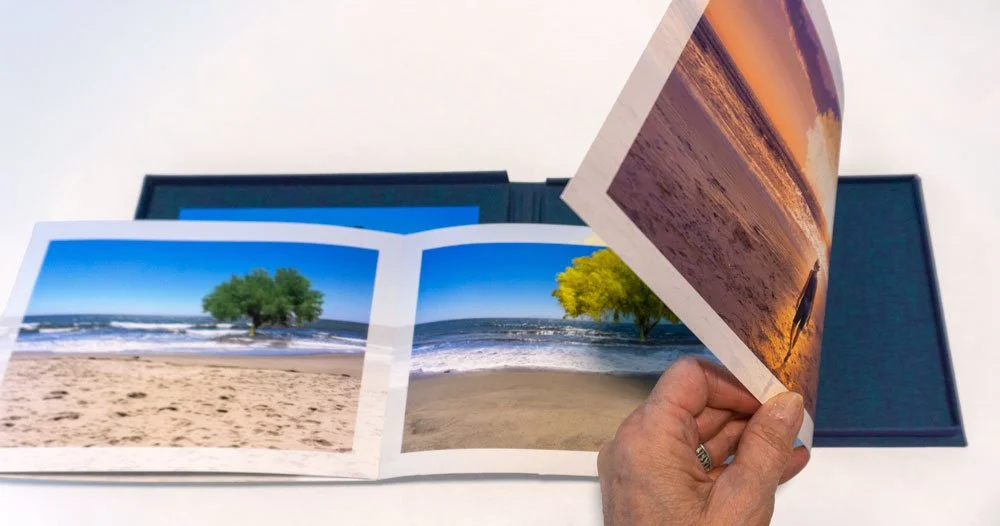
© 2025 Louise Levergneux. Paradigm Shift is an accordion book composed of four double-sided panels that charts a transformation in my understanding of home and identity.
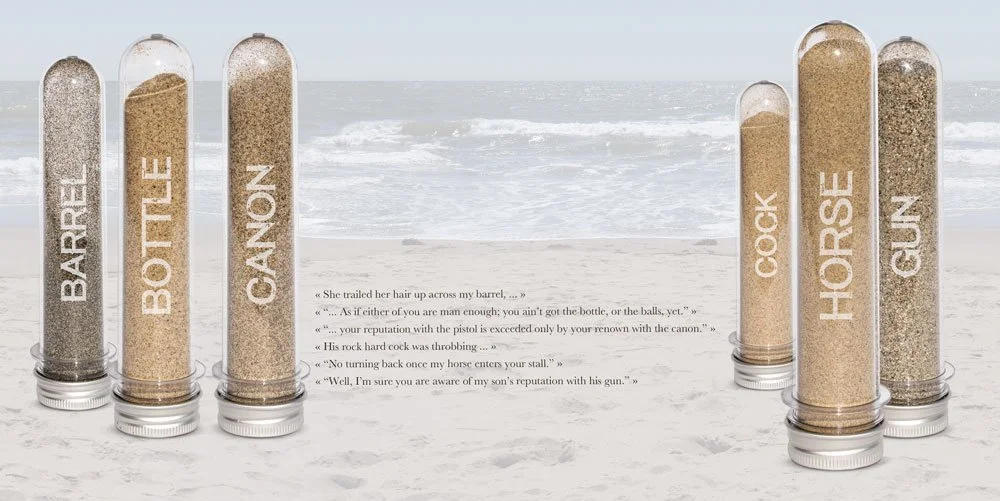
© 2023 Louise Levergneux. In Pistolero, the sensuousness of sand and its visual association with the male form create a fresh perspective on language and invite a whimsical, tongue-in-cheek narrative.
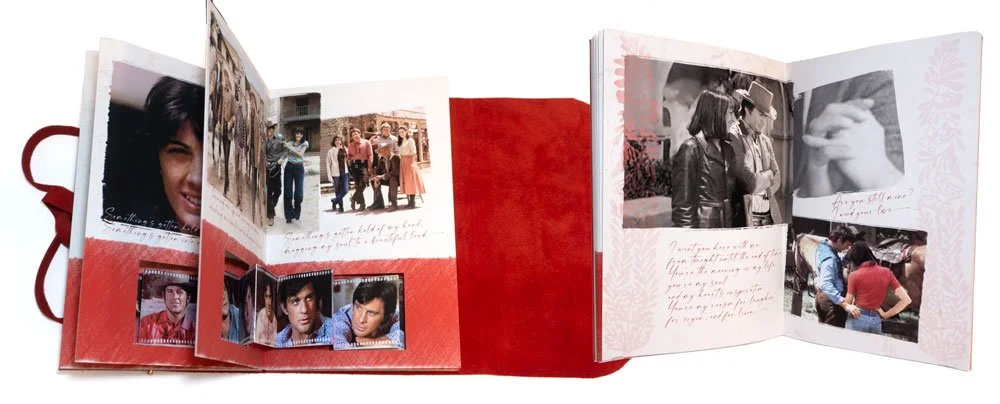
© 2022 Louise Levergneux. Infatuation explores coming of age through a recurring dream rooted in a cherished encounter with an « amour fou », allowing the dreamer to enter an unattainable world.
These subjects may appear personal or ordinary, but they are shaped by the cultural and historical conditions in which we live. I do not see attention to personal experience as an escape from contemporary concerns. Personal and ordinary experiences are not separate from the major concerns of the present; they are the means through which those concerns are lived and understood. Through memory, relationships, experiences, and daily rituals, larger questions enter individual lives.
This has made me think about the different kinds of work that artists’ book collections can hold. Academic and research libraries play an important role in preserving work that responds to urgent subjects such as climate change, political conflict, migration, identity, public health, and social justice. These subjects matter deeply, and artists’ books can approach them with an intimacy and complexity that other forms sometimes cannot. I also believe that collections are strengthened by work that approaches the present through personal experience, memory, relationships, popular culture, and the ordinary details of daily life. Together, these perspectives help create a fuller record of the time in which we live.
At the same time, work that responds to the present more indirectly—through family history, popular culture, relationships, personal experience, or memory—may be less immediately visible as socially engaged. Its connection to the larger concerns of an era may emerge gradually, through the ways people experience and interpret their everyday lives.
These quieter subjects also tell us how people live through history. Libraries can preserve not only what a period discussed publicly, but also how that period was felt and experienced in private. Personal experience is one of the ways social history becomes real.
Artists’ books are especially suited to this kind of work. They preserve experience through sequence, touch, scale, movement, and material, as well as through words and images. They can hold a private memory while opening it toward shared questions.
Contemporary collections need both the visible pressures of an era and the private lives that carry them. My work approaches contemporary life through memory, relationships, personal experience, and the ordinary rituals through which we make meaning. These are not detours from the present. They are ways of understanding how the present is lived.
A resilient archive preserves both the visible pressures of an era and the private lives that carried them.